-KH News desk (editorial1@imaws.org)
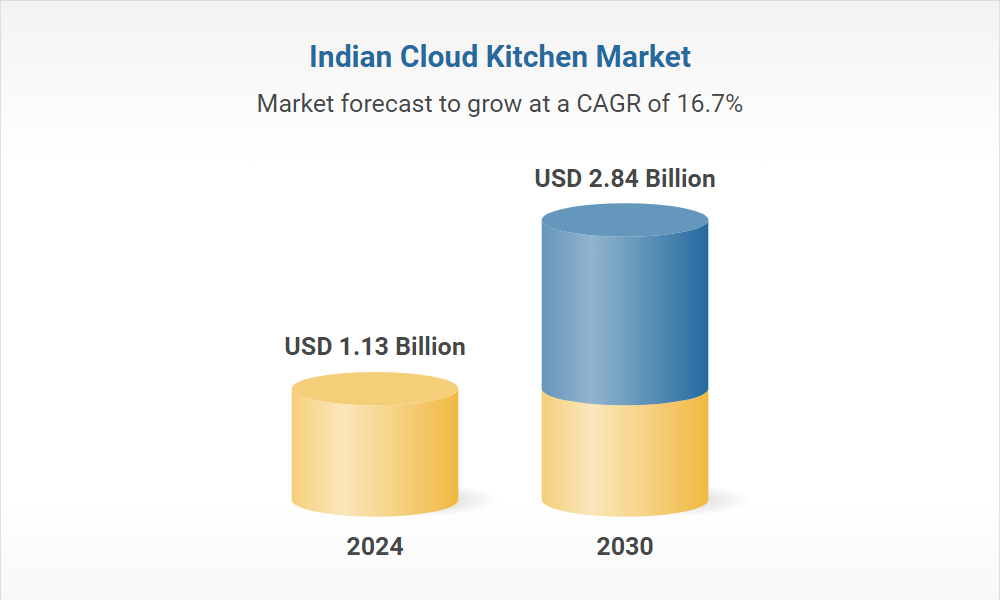
The India Cloud Kitchen Market is witnessing an unprecedented growth trajectory, with the latest market intelligence from IMARC Group and Research and Markets projecting a valuation of US$ 2.4 Billion by 2034. This represents a robust Compound Annual Growth Rate (CAGR) of 12.28% between 2026 and 2034, signaling a permanent structural shift in India’s food services landscape.
Cloud kitchens—also known as ghost kitchens or dark kitchens—operate exclusively for delivery, bypassing the high overheads associated with traditional brick-and-mortar dining. This model has become the cornerstone for both homegrown startups and international franchises looking to scale rapidly across India’s Tier-I and Tier-II cities.
Key Market Drivers & Trends:
-
Lower Operational Barriers: By eliminating front-of-house expenses like prime real estate rentals, interior decor, and waitstaff, cloud kitchens offer a leaner business model with faster capital rotation.
-
Tech-Driven Logistics: The deep integration of AI-driven demand forecasting and the expansion of third-party delivery platforms like Swiggy and Zomato have optimized the delivery “last mile,” making high-frequency ordering more sustainable.
-
Changing Consumer Behavior: A growing “Gen Z” and millennial workforce, combined with rising dual-income households, has normalized food delivery as a daily utility rather than an occasional luxury.
-
Brand Proliferation: The model allows a single kitchen infrastructure to host multiple “virtual brands”—ranging from gourmet pizzas to regional Indian cuisines—maximizing kitchen utility and revenue per square foot.
Market Segmentation & Competitive Landscape: The market is currently dominated by independent cloud kitchens, which hold the largest share due to the ease of entry for small-scale entrepreneurs. However, franchised models are gaining rapid ground as established restaurant groups look to expand their geographic footprint without the risk of large-scale physical investments.
Leading players such as Rebel Foods (Faasos/Behrouz Biryani), Box8, FreshMenu, and Lite Bite Foods are increasingly focusing on “smart kitchens” that utilize automation and standardized SOPs to maintain consistent quality across hundreds of locations.
Future Outlook: As the industry moves toward 2034, the focus is expected to shift toward sustainability and nutrition. With the FSSAI simplifying licensing (transitioning to perpetual permits), the cloud kitchen sector is poised to become the primary engine for formalizing India’s vast unorganized food market, potentially becoming a US$ 3 Billion ecosystem within the next decade.