

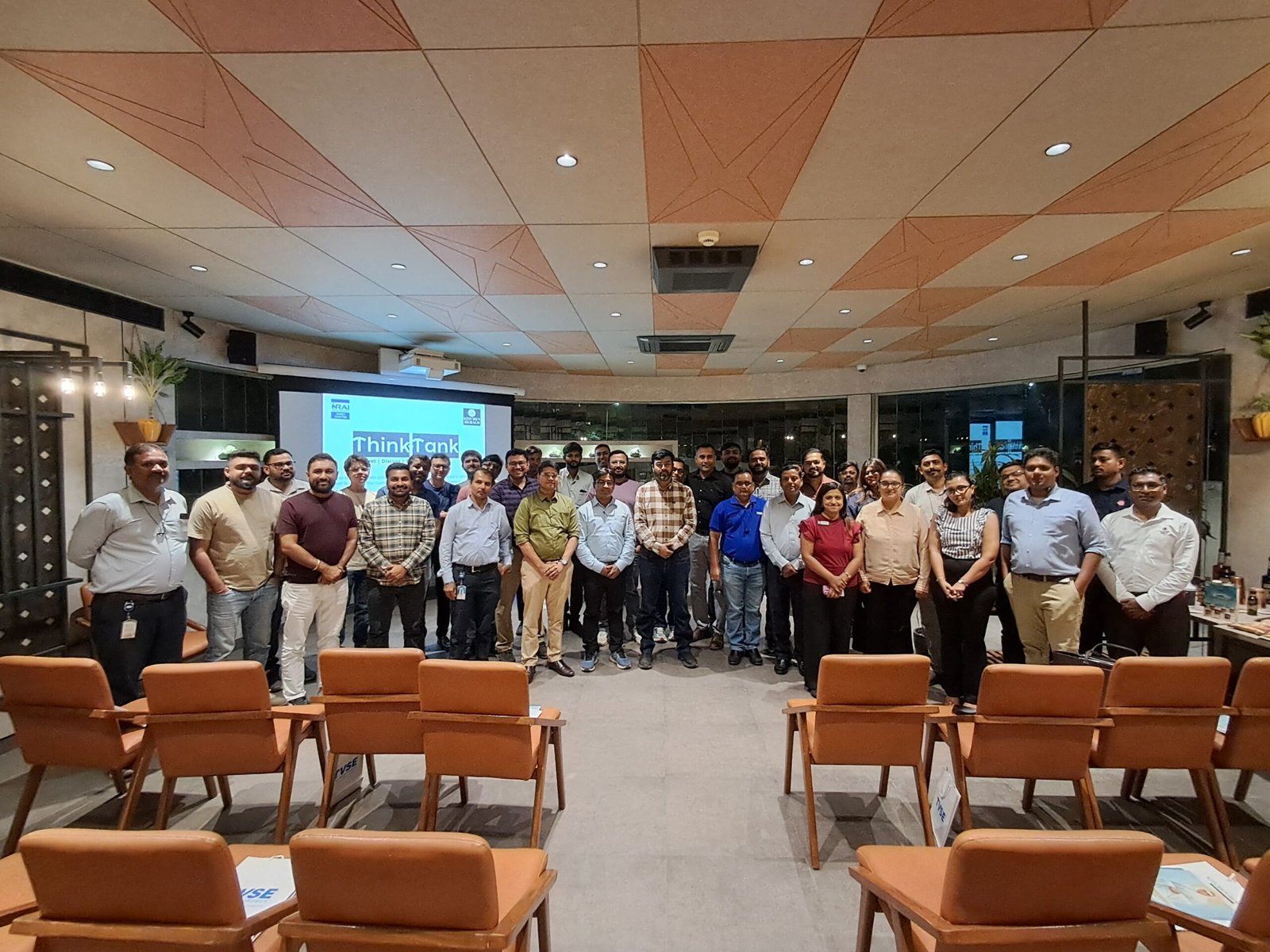
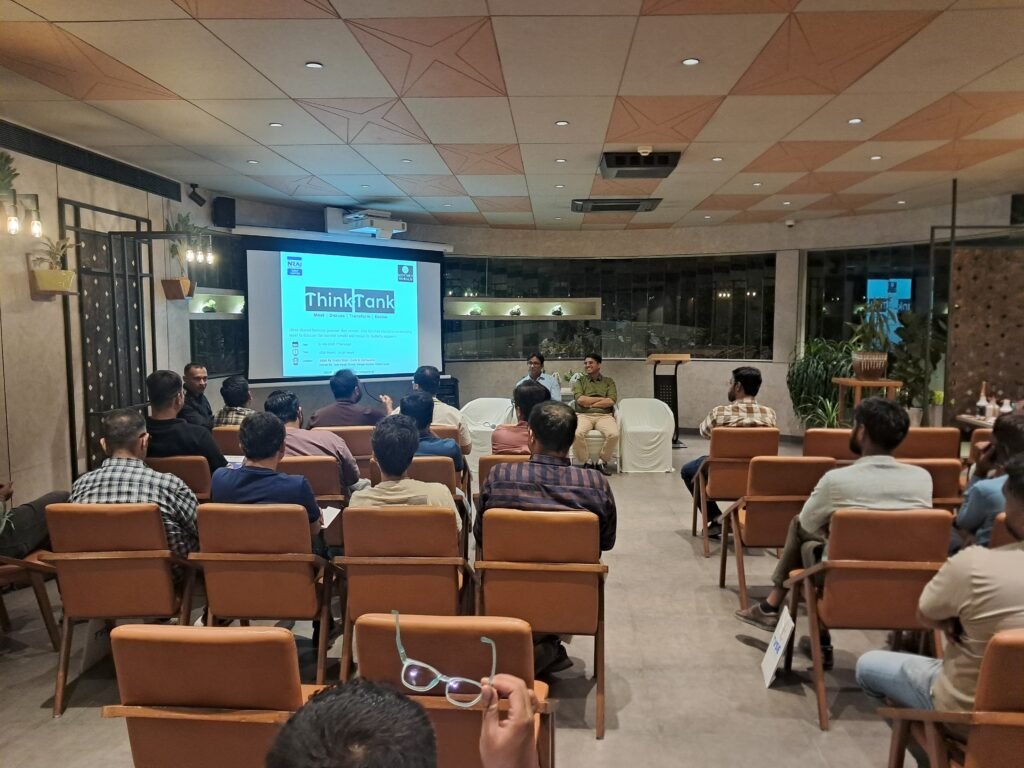
Surat : In a significant step toward strengthening the relationship between government authorities and the restaurant business community, Kitchen Herald and the National Restaurant Association of India (NRAI), Surat Chapter jointly hosted the latest edition of Think-Tank on May 21, 2026. Close to 40 members from Surat’s restaurant fraternity gathered alongside officials from the Central GST Department and the Gujarat State Food Safety Department for an evening of candid dialogue, policy clarity, and productive exchange. The strong turnout itself was a statement — an industry eager to engage, learn, and be heard.
# A Dialogue Platform That Has Evolved With the Industry
Think-Tank is the evolved identity of a forum that Kitchen Herald has been nurturing for years. For the story of how this platform has grown from its earlier avatar, readers can visit [Kitchen Herald’s events page](https://kitchenherald.com/our-events/). The rebranding signals a sharper mandate: to meet, discuss, transform, and evolve — four pillars that now define its commitment to the welfare of the restaurant industry. This edition marked a new chapter in that journey, with NRAI Surat’s institutional partnership lending the platform greater reach, credibility, and collective purpose.
B Swaminathan, Editor and Publisher of Kitchen Herald, placed the rebranded platform in context. The Think-Tank is not simply a networking event — it is a policy dialogue forum with a deliberate agenda. Swaminathan explained that ideas shared at such forums have the potential to become policies that matter, and that the evening’s format — with government officials directly answering industry questions — was by design. He welcomed the participation of both the CGST officers and the Gujarat Food Safety Department as a sign of growing institutional responsiveness to the restaurant community’s needs.
Why the Restaurant Industry Deserves Institutional Recognition?
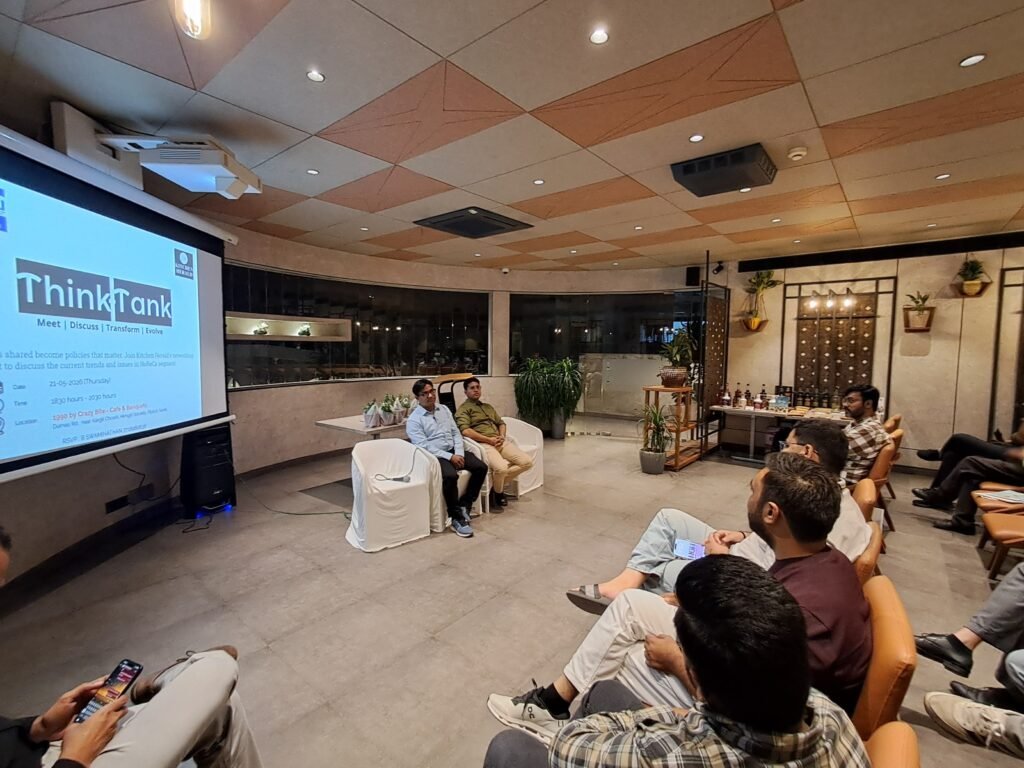
Ashwin Singh, Chapter Head of NRAI Surat, delivered the welcome address, setting a tone that was equal parts candid and aspirational. He listed the key operational and regulatory challenges that restaurant businesses in Surat face daily — from compliance complexity to inconsistent enforcement — and situated them within a larger strategic vision for the sector.
Ashwin reiterated a call he has been making consistently in public forums: that the restaurant industry must be granted recognition as a designated industry first, and that without a singular, dedicated Ministry of Hospitality, the sector will remain tethered to outdated regulations that stifle its growth. He noted that while most restaurant operators fall under the MSME umbrella, the absence of focused institutional attention prevents the wholesome development of a sector that could realistically reach a ₹25 lakh crore valuation with the right structural support.
On the GST front, Ashwin was unequivocal. He described the current regime — where restaurants pay 5% GST but are denied Input Tax Credit — as a “bleeding” point for the industry. “We are paying 18% GST on rentals and raw materials, but we cannot claim credit,” he said, pointing out that the bakery segment enjoys ITC benefits that the restaurant sector is arbitrarily denied. This fiscal pressure forces many businesses into a defensive averaging of prices, which ultimately results in inflated costs passed on to the consumer. Restoring ITC, he argued, is not a concession to the industry — it is a correction of a structural inequity that is quietly undermining one of India’s most employment-intensive sectors.
Ashwin also stressed that the sector’s potential as a revenue contributor to the Indian tax ecosystem is significantly under-realised. “Food is a hidden treasure,” he said, “and if taxed with clarity and fairness, this industry can become one of the most significant contributors to the national tax framework.” He closed his remarks with a call for unity between government and industry, emphasising that the Surat chapter has always preferred constructive dialogue over confrontation — a philosophy that has helped resolve challenges over four years without a single public demonstration.
GST Complexities, ITC Blockage, and the Push for Smarter Compliance
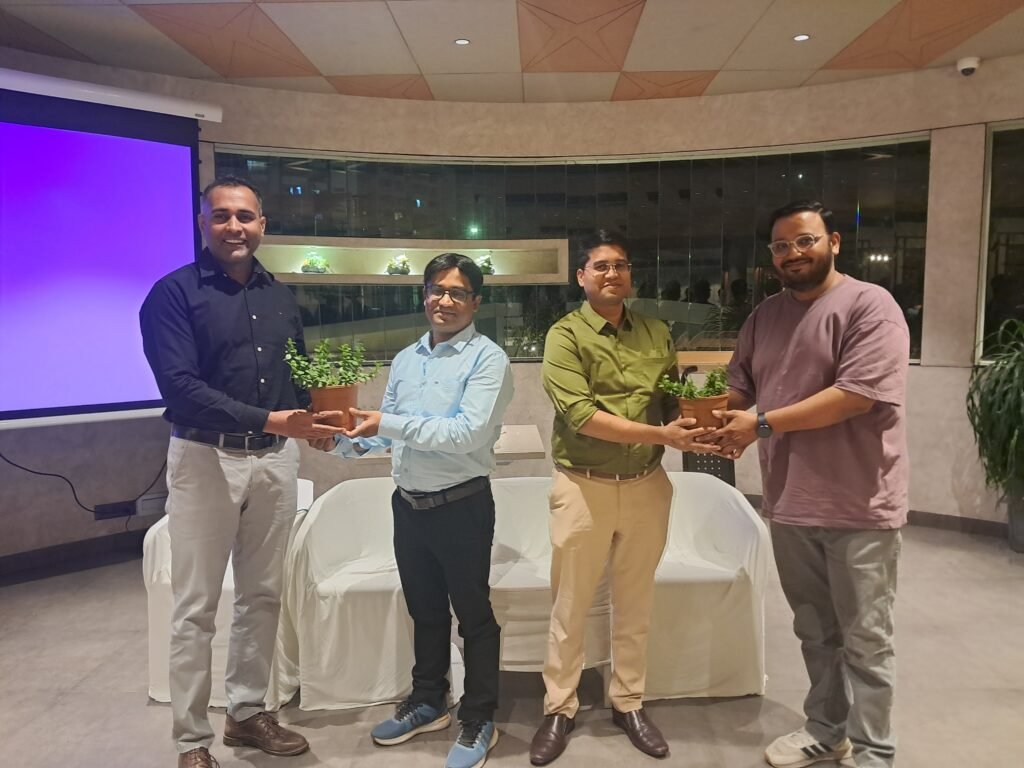
The most animated segment of the evening took on the GST challenges that restaurant owners navigate daily. Vipin Sharma and colleagues from the Central GST Department fielded a wide and direct set of questions from a floor that had clearly come prepared.
The blockage of Input Tax Credit dominated early discussions. Vipin walked attendees through the current legal position while acknowledging the industry’s frustration, particularly the structural anomaly between how bakeries and restaurants are treated under the same GST framework — a disparity that operators have long flagged as inequitable and that NRAI Surat has been actively pushing to correct.
The issue of wrongful reporting and account concealment was addressed directly. Vipin referenced a recent instance where a raid was conducted on restaurant premises following data-driven discrepancies between reported and actual revenues — a clear signal that tax authorities are now cross-referencing POS data, aggregator records, and bank statements rather than relying solely on filed returns. The room took note.
The compliance complexity around dine-in versus online delivery orders generated significant discussion. Many operators managing both channels admitted to confusion about which GST category applies to aggregator-fulfilled orders versus in-house delivery — a grey area that Vipin helped clarify with practical examples drawn from actual compliance scenarios.
The Composition Scheme’s operational restrictions were another sore point raised from the floor. While the scheme offers simplified compliance for smaller operators, participants pointed out that its turnover caps and restrictions on inter-state business effectively penalise ambition and growth. Vipin acknowledged this tension and encouraged eligible operators to document their concerns formally through NRAI’s representation channel.
The question of bringing street-side vendors under the GST panel generated a lively and nuanced debate, with participants weighing the benefits of formalisation against the risk of burdening small operators with compliance costs they cannot absorb. Vipin noted that the government’s intent is inclusion without disruption and invited structured feedback from the association.
The session concluded with a clear, collective demand for standardised GST reporting within restaurant technology platforms — from POS systems to aggregator dashboards and billing software — so that compliance is embedded into daily operations rather than treated as a separate and costly administrative exercise.
Navigating New Food Safety Rules: Compliance, Transparency, and Hygiene
C.N. Parmar, representing the Gujarat State Food Safety Department, addressed a room with many unresolved questions about the rapidly evolving food safety regulatory landscape. The session covered new rules, updated standards, and on-ground enforcement realities — and Parmar addressed all three with clarity and detail.
Parmar began by walking participants through the most significant recent regulatory updates. FSSAI has notified the Food Safety and Standards (Licensing and Registration of Food Businesses) Amendment Regulations, 2026, introducing perpetual validity for registrations and licences, removing the need for repeated renewals. On the revised threshold structure, Parmar clarified that businesses with an annual turnover of up to ₹1.5 crore will now only require basic registration — up from the earlier limit of ₹12 lakh — while those with turnover up to ₹50 crore fall under state licensing. For street food operators who have long existed in a regulatory grey zone, Parmar highlighted a meaningful simplification: vendors already registered with municipal corporations under the Street Vendors Act, 2014 will now be treated as automatically registered with FSSAI, eliminating redundant compliance steps that had previously discouraged formalisation.
Parmar then addressed one of the most operationally relevant compliance areas — food labelling and display. FSSAI has directed all food business operators to prominently display their licence copy with a QR code linking to the Food Safety Connect mobile application, which allows consumers to lodge complaints, report misleading claims, and access information about registered businesses. Parmar urged restaurant operators to treat this as a trust-building tool rather than an additional burden, noting that consumer awareness is rising sharply and that proactive compliance protects operators as much as it protects customers.
A significant portion of the session addressed the updated food additives and product standards that now apply directly to restaurant kitchens. Amended regulations introduce updated standards for oils, meats, herbs, food colours, and packaged drinks, with these amendments having come into effect from February 2026. For operators sourcing bulk oils, pre-mixed spice blends, and processed ingredients, Parmar underlined that supplier certification due diligence is now a regulatory requirement — not optional practice.
Parmar also highlighted the growing concern around ingredient transparency, noting that authorities across Gujarat have intensified scrutiny of how ingredients are described both on menus and in kitchen records. More than 15,000 food business operators across Gujarat have been instructed to clearly indicate the nature of ingredients used in their dishes, with non-compliance attracting legal action. He encouraged Surat’s restaurant operators to proactively audit their menu descriptions and sourcing documentation before enforcement catches up with them.
On hygiene enforcement, Parmar acknowledged that citizen-complaint-driven inspections are gaining momentum and producing real consequences for non-compliant businesses. Multiple food establishments in Gujarat have faced closure following citizen complaints about poor hygiene — including instances where insects and unsanitary conditions were discovered during inspections. He encouraged operators to view hygiene audits not as threats but as opportunities to build lasting customer confidence. The floor session that followed was lively, with participants raising specific doubts on food item classification, kitchen storage compliance, and licensing pathways — all of which Parmar addressed with patience and specificity.
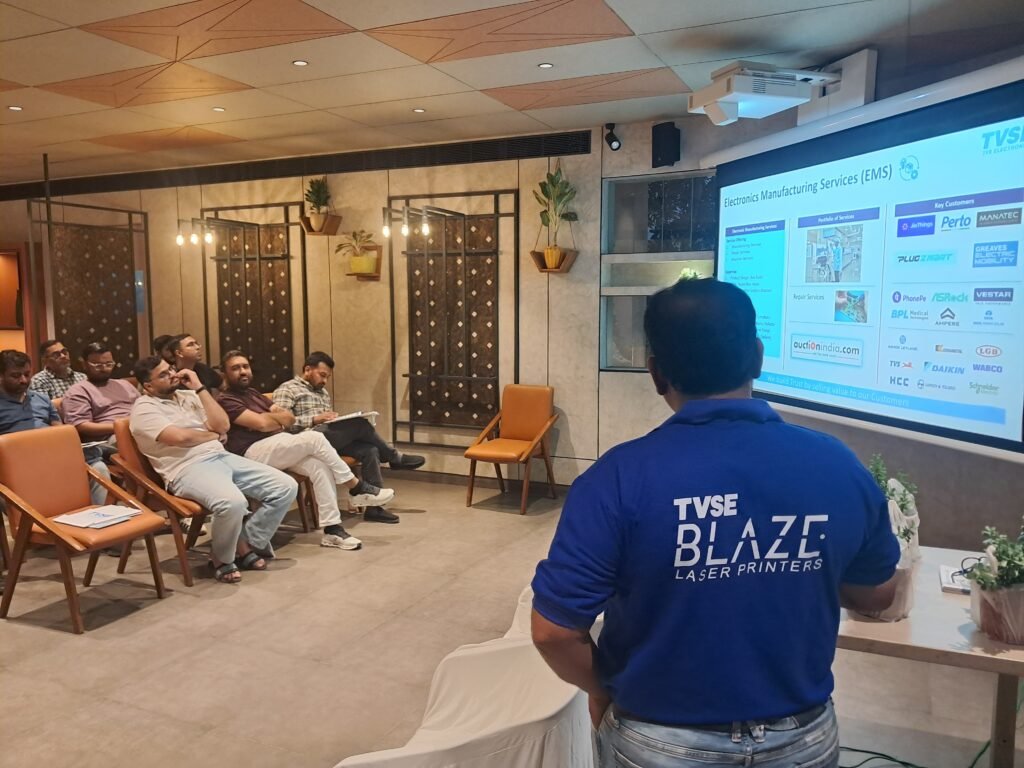
Industry Solutions on Display: Food Service India and TVS Electronics
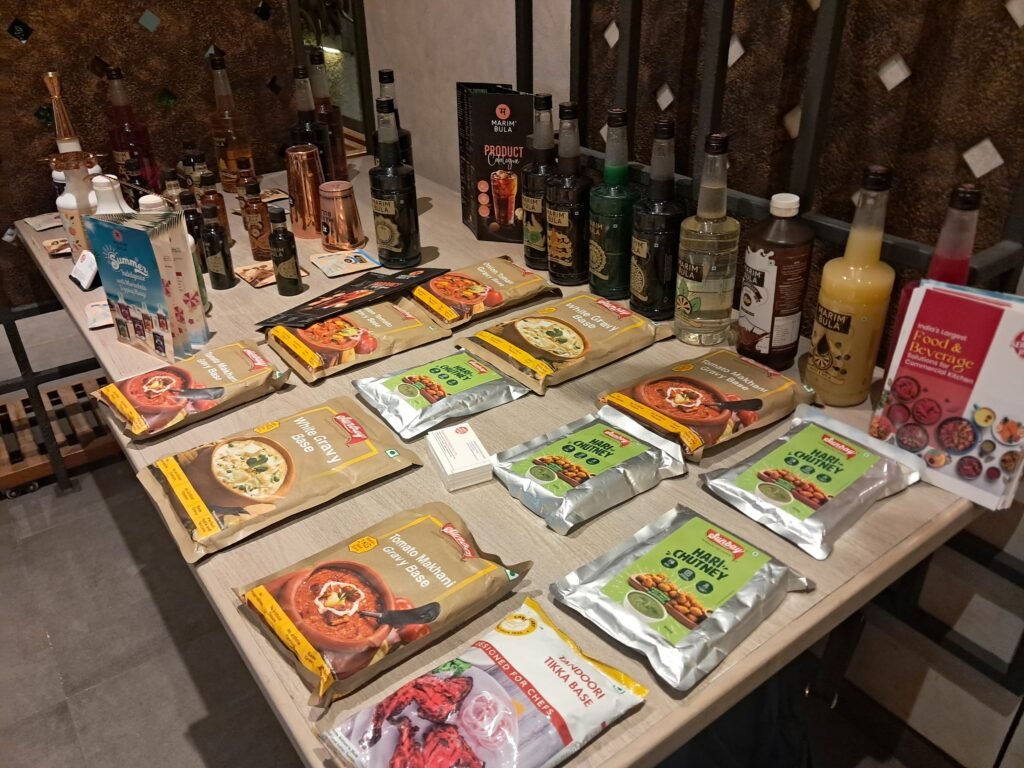
Adding a practical dimension to the evening, Food Service India and TVS Electronics presented their solutions to the assembled members, drawing considerable interest from the floor.
Food Service India showcased offerings tailored to the sourcing, supply chain, and operational needs of restaurant businesses — addressing pain points that operators deal with on the ground every day. Their presentation sparked conversations around how the right supply partnerships can directly impact both food quality and cost efficiency.
TVS Electronics presented their technology solutions relevant to the restaurant sector — covering billing, POS infrastructure, and reporting systems that directly interface with GST compliance requirements. Given the evening’s extensive discussion on the need for standardised technology reporting, the timing of TVS Electronics’ presentation could not have been more apt, resonating strongly with members who had just spent the better part of an hour discussing how poorly integrated technology platforms contribute to compliance headaches.
Both presentations underlined a growing recognition within the industry that operational excellence and regulatory compliance are no longer separate conversations — they are deeply interconnected, and the right technology and supply partnerships are central to achieving both.
An Industry Ready to Grow — With the Right Support
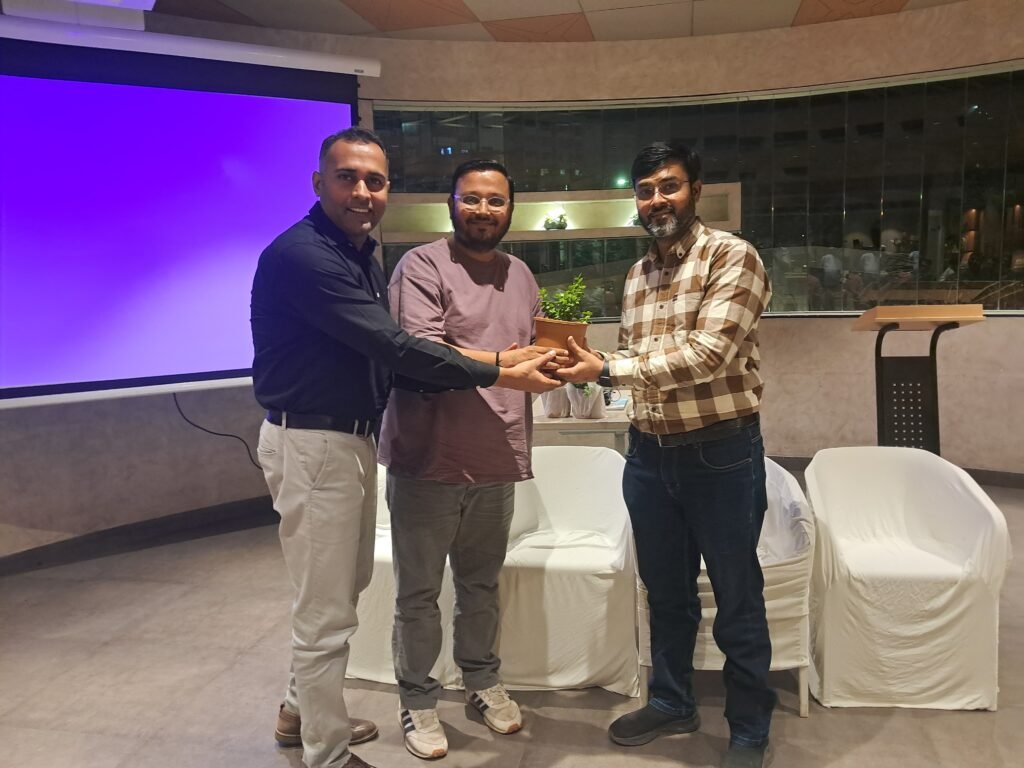
Mitesh Diyora, Co-Chapter Head of NRAI Surat, delivered the vote of thanks, bringing the evening to a warm and purposeful close. He expressed gratitude to Kitchen Herald for consistently providing a platform where industry and government can speak honestly to each other. He thanked the officers from the CGST Department and the Gujarat Food Safety Department for their time and openness, noting that their willingness to engage directly with operators signals a positive shift in how authorities view the restaurant sector.
Mitesh acknowledged the active participation of all 40 members present and expressed confidence that the evening’s conversations would translate into tangible improvements — both in how operators understand their obligations and in how regulators approach the restaurant industry going forward. He also appreciated Food Service India and TVS Electronics for bringing relevant, real-world solutions to the table, reinforcing the Think-Tank’s identity as a space where business, policy, and technology converge. He reaffirmed NRAI Surat’s commitment to future editions of Think-Tank, describing the forum as precisely the kind of constructive, action-oriented dialogue space the industry needs to grow with clarity, confidence, and institutional backing.
—Reported by the Kitchen Herald Editorial Team | For previous editions of this platform, visit [kitchenherald.com/our-events](https://kitchenherald.com/our-events/)
