

-B Swaminathan (swami@imaws.org)
The NRAI Ahmedabad chapter is weeks away from staging the first national restaurant industry summit ever held on Gujarat soil. Its official launch is happening at the same event. In an exclusive dialogue with Kitchen Herald, Aanal Kotak, Head of the NRAI Ahmedabad Chapter, and Co-head Dilip Thakkar detailed how and why Gift City’s 65% liquor VAT is quietly strangling a billion-dollar opportunity.
GIFT City: Fortune or Friction?
The easing of liquor policies in GIFT City has sparked intense debate regarding its impact on the broader Ahmedabad F&B market. However, Kotak remains optimistic, viewing GIFT City as a catalyst rather than a competitor. “I don’t believe GIFT City will cannibalize Ahmedabad’s existing restaurant business,” Kotak stated. “The cultural fabric of Gujarat is unique. Five days a week, diners will still prefer their local favorites. GIFT City serves a specific niche, and unless there is a fundamental shift in social norms, the ‘ice-break’ of public consumption remains rare.”
The real hurdle, according to the NRAI leadership, is not the policy itself but the fiscal framework.
The Taxation Barrier: Currently, Value Added Tax (VAT) on liquor in the special zone stands at 65%.
The Price Point: High taxes push the cost of a standard beer to ₹500–₹600, a price point Kotak argues is unsustainable for attracting the necessary volume of business.
The Benchmarking Goal: NRAI is advocating for a taxation structure closer to Maharashtra’s 23%–25% to ensure a “win-win” situation for investors and consumers alike.
The Number That Is Choking Gift City’s Restaurant Ambitions
Despite the tax headwinds, Bastian is, in fact, coming to Gift City. That in itself is a signal — that the long-term bet on Gift City as a premium dining destination is credible, even if the operating conditions need adjustment. What Kotak and Thakkar are working toward is making sure that when the national brands arrive, they are arriving into a policy environment that supports them rather than taxes them into unprofitability.
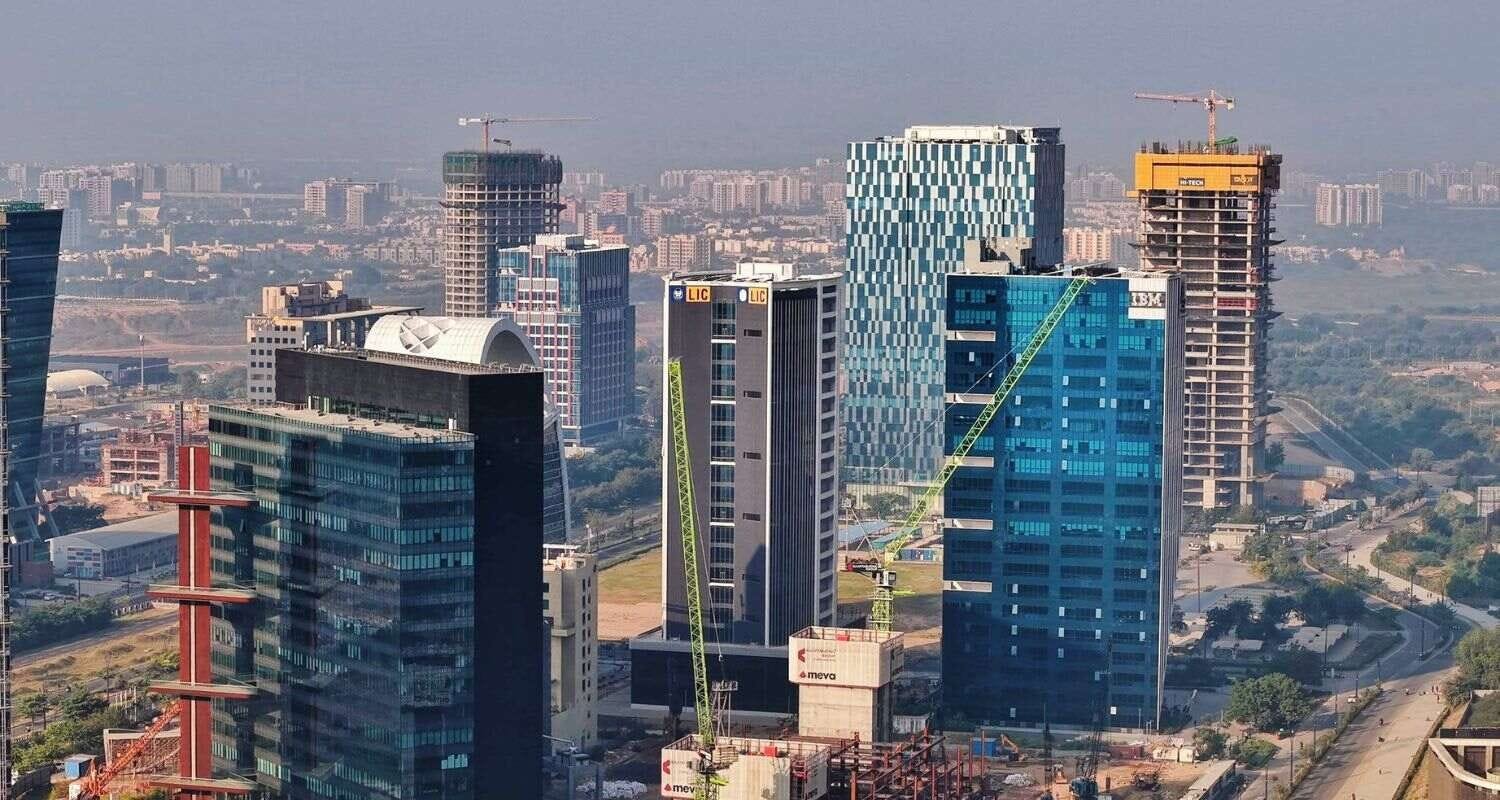
If there is one number that keeps coming up in any serious conversation about Gujarat’s food and beverage landscape, it is 65. That is the percentage VAT currently levied on liquor sold within GIFT City — the international financial hub on the outskirts of Ahmedabad that has been positioned as Gujarat’s answer to DIFC and Canary Wharf. Gift City has relaxed its liquor policy to allow sales within its premises — a significant move in a state where prohibition remains in place everywhere else. But the tax structure has not kept pace with the policy change. At 65% VAT, a single small beer can end up being priced at Rs 500 to Rs 600, turning what should be a premium dining experience into a financially unviable proposition for operators and a deterrent for customers.
“We are already in talking terms with our Deputy Chief Minister regarding what reforms are needed to ease doing business in Gift City,” says Kotak. “The policy on liquor has been relaxed, but the taxation is the problem. If the VAT comes down to the Maharashtra level — around 23 to 25 percent — it changes the entire calculus for investors and operators.”
The chapter’s asks from the government are specific rather than sweeping: a reduction in liquor VAT to levels comparable to Maharashtra, and a broader set of reforms that make it easier to run an FnB business in the state. “We are working parallelly with the government — providing data, sharing perspectives, raising what the industry needs,” says Kotak. “But to do that effectively, we need to be stronger in terms of membership. Our voice is proportional to our numbers.”
Will Gift City’s Bar Scene Hurt Restaurants Outside It? Probably Not.
One question that surfaces in any discussion about liberalising liquor access in a prohibition state is the ripple effect on adjacent markets. If Gift City becomes a destination for dining and drinking, does it pull customers away from the restaurants that operate within Ahmedabad’s dry environment — businesses that have built their models around food, atmosphere, and non-alcoholic beverages?
Kotak’s answer is measured but clear. “I don’t see it playing out that way. In Gujarat, there is no established culture of drinking openly — not yet. If someone wants liquor, they might go to Gift City for it. But five days a week, they are going to eat at a normal restaurant because that is not their motivation for going out. The icebreak — where a father and son might sit together and share a drink — that culture is still very rare here.” In other words, the fear of cannibalisation may be overstated. The markets are different enough — in behaviour, in occasion, in price point — that coexistence is likely rather than competition.
Small Restaurants, Big Table: Who NRAI Ahmedabad Is Building For
Ask Kotak and Thakkar who the Ahmedabad chapter is trying to recruit, and the answer is deliberately inclusive. There is no minimum size, no minimum turnover, no minimum number of seats. “We are looking for any and all restaurants — big or small — to be part of this association,” Kotak says. “Right now, we are focused on creating awareness about what the benefits of joining NRAI actually mean for an operator. That is the work our core committee is doing on the ground.”
 The rationale is strategic as much as it is philosophical. A large, diverse membership base is not just a good-looking number — it is the foundation of credibility when the association sits across the table from government. “We want to stand strong as a unified FnB industry in Gujarat,” says Thakkar. “One that has a real impact on policy and on the government bodies that shape the environment we all operate in.”
Gujarat, both point out, is at an inflection point for the food and hospitality sector. Gift City is growing. Large sporting events are coming. New infrastructure is being built. The question is not whether the industry will grow — it is whether the industry will be organised enough to shape the conditions in which it grows. For NRAI Ahmedabad, the food delivery summit in June is not just a national event. It is the opening argument.
A Summit Before the Launch Party
There is something quietly audacious about what the National Restaurant Association of India’s Ahmedabad chapter is attempting. The chapter is barely a year old. It has never held an official launch event. And yet, it is on the verge of hosting the first NRAI national summit ever to be held in Gujarat — an event that, in the same breath, will serve as the chapter’s own formal debut.
“This is going to happen for the first time in NRAI’s history — a new chapter hosting a national event,” says Aanal Kotak, the chapter’s head, who speaks with the measured confidence of someone running a project that is larger than it looks. “And it is going to be the first time a national event of this scale comes to Gujarat. That, in itself, is a significant achievement — for the chapter, and for the FnB industry here.”
The summit is centered on food delivery — a sector that has been under intense scrutiny at the national level — and is being planned for around the second week of June, with the 10th of June as a working date. The timing, Kotak explains, has not been entirely within the chapter’s control. A geopolitical undercurrent around supply scarcity has been running through the background, and the chapter has been monitoring updates from government bodies before finalising details.
“The updates we are getting internally suggest that the situation might get resolved,” Kotak says carefully. “But what is being discussed internally and what the news media is reporting are two very different things right now. We are staying open and watching closely.” In the meantime, the chapter has not been idle. The core team, led by Kotak and co-head Dilip Thakkar, has been working on expanding the chapter’s territorial reach in ways that most one-year-old bodies would not yet attempt. Plans are underway to open a chapter in Rajkot. Membership is being pursued across the Banaskantha district. The Ahmedabad chapter’s territory is being extended eastward toward Anand and northward toward Mehsana — an ambition that, if realised, would make it the largest NRAI chapter in Gujarat.
“Once the chapter launch and this summit happen, Ahmedabad will become the largest chapter in Gujarat,” Kotak says. “That is the trajectory we are on.” Thakkar, who has been the quieter but steady hand in building the chapter’s governance framework, frames the longer-term goal plainly: “We will try to coordinate knowledge-based seminars and workshops to create awareness, and we will work to build a liaison with the Government of Gujarat and relevant authorities — so that we can create an environment that is genuinely business-friendly for the FnB sector.”
Core Principles of the NRAI Ahmedabad Chapter:
Government Liaison: Working parallel with authorities to refine ease-of-doing-business reforms.
Knowledge Sharing: Hosting seminars and workshops to professionalize small and large-scale operators.
Policy Impact: Leveraging a growing membership base to influence F&B-related government policies.
