

-By B Swaminathan (swami@imaws.org)
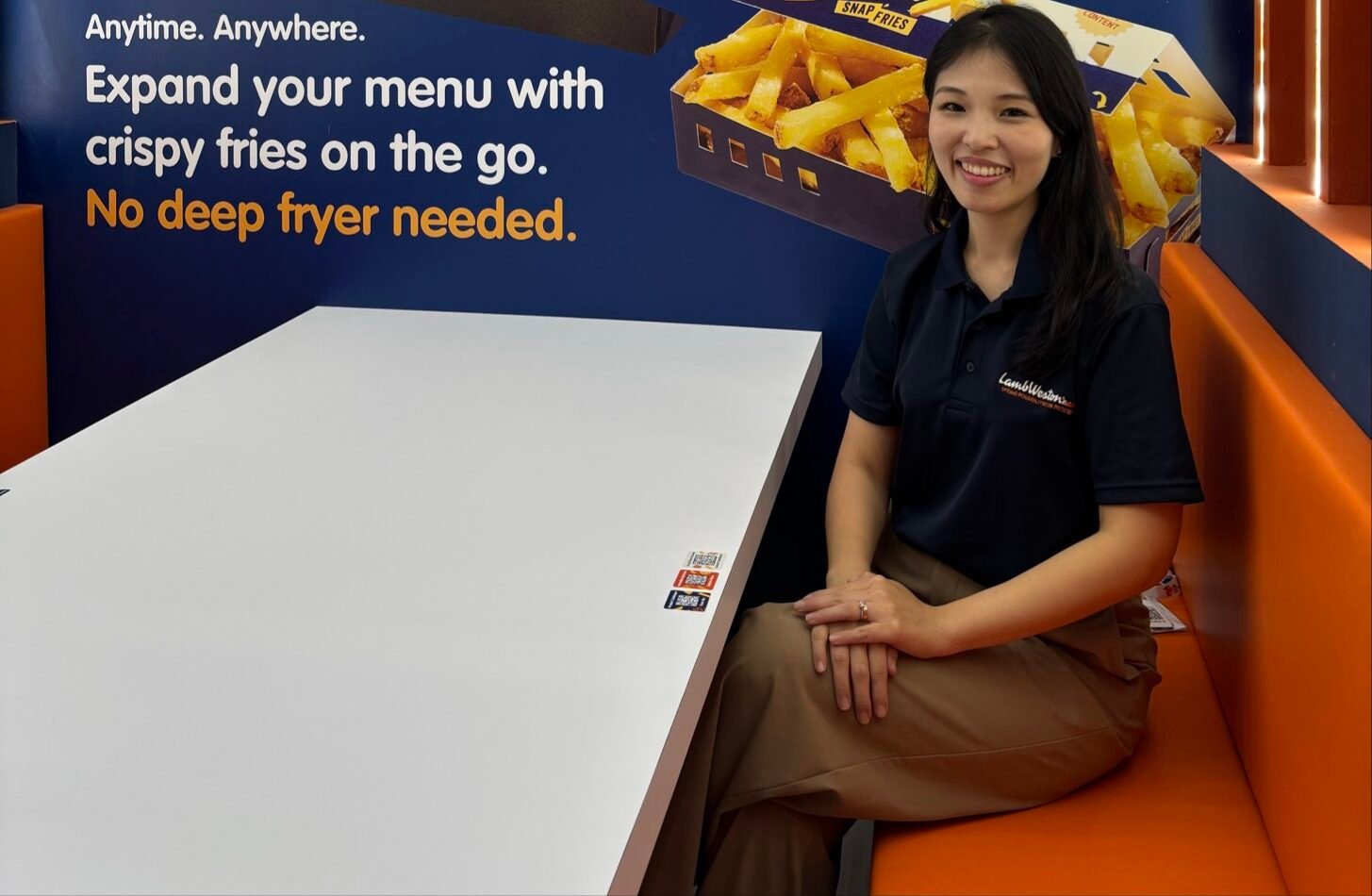
French fries are rarely described as an engineering challenge. But talk to someone who works in the category seriously and the picture changes fast. Getting a fry to stay crispy through the journey from fryer to delivery bag, to hold its crunch when reheated in a combi oven, to perform identically whether it’s produced in one of 27 factories across the world — these are problems that require genuine industrial precision. Lamb Weston has spent 75 years working on them.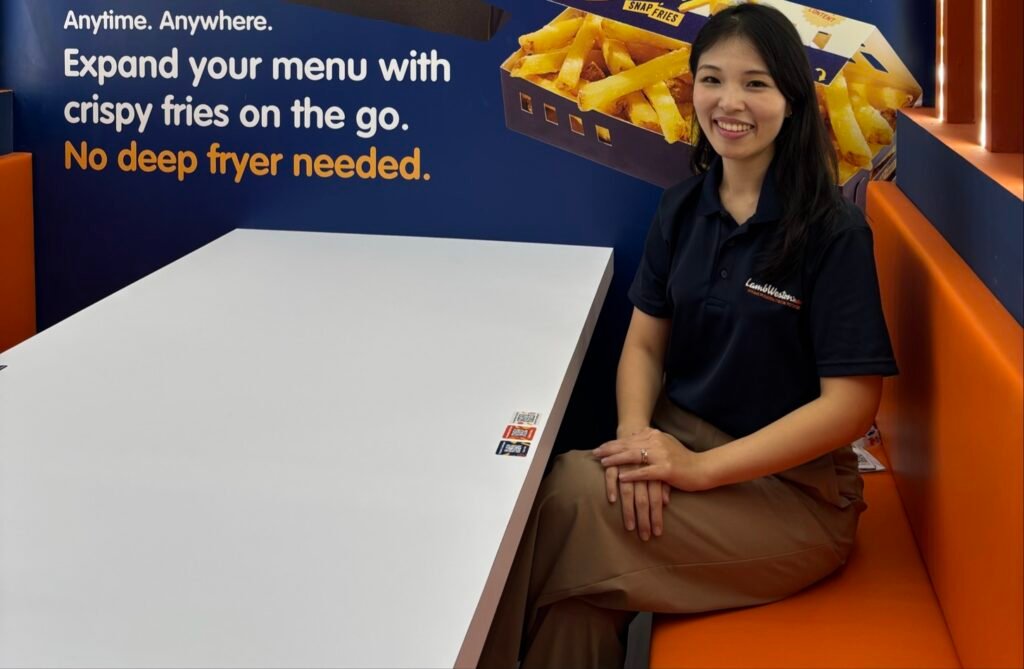 At a recent industry event, Kitchen Herald spoke with Idy Chua, Assistant Trade Marketing Manager at Lamb Weston, about what is driving the fries category right now, how the company manages supply chain quality across Southeast Asia, and why a snack originally designed for airline galleys is turning heads among cafe operators without deep fryers.
Crunch, Convenience, and the Consumer Who Will Not Compromise
The fries category, Chua says, is being pulled in two directions simultaneously — and operators are expected to satisfy both at once. On one side, consumers want indulgence: a proper fry with real crunch, not something that goes limp in the bag between the restaurant and the front door. On the other, they want speed, simplicity, and increasingly, a product that does not require a deep fryer or extra oil to deliver a satisfying result.
“Crispiness is always top of mind for our category,” Chua says. “Consumers want the crunch — and the fries need to stay crispy when they are being delivered from the restaurant to the consumer.” That last-mile texture problem is one the industry has not fully solved, and it shapes much of how Lamb Weston develops and positions its products.
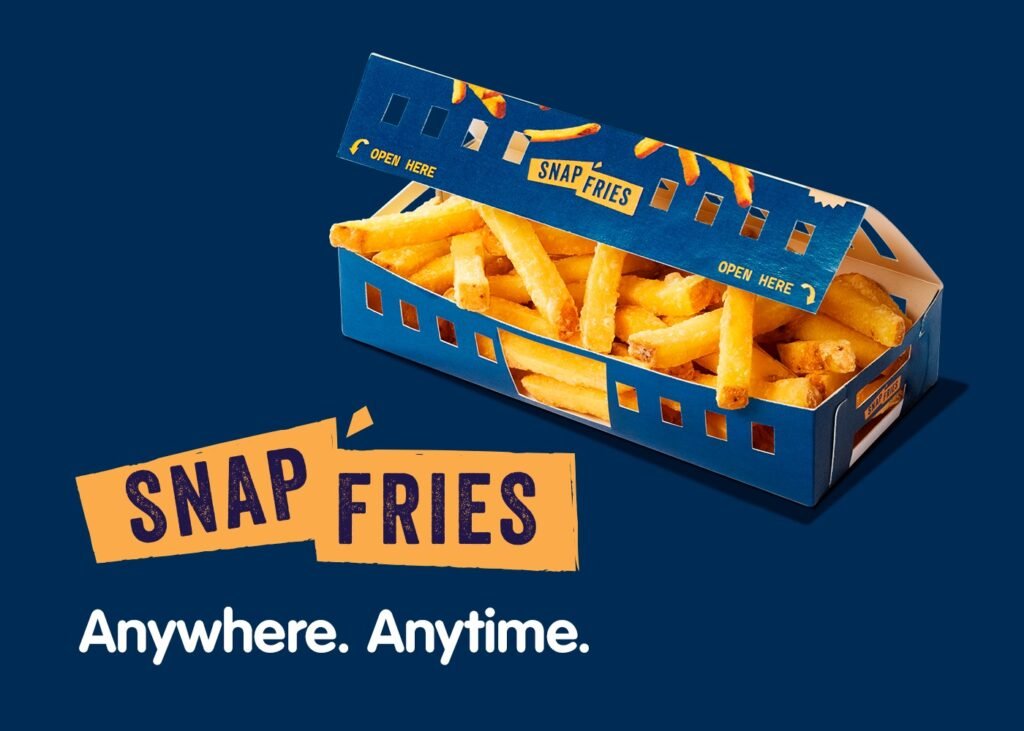
The convenience dimension is just as pressing. Operators, particularly in cafés and fast-casual settings, face constant pressure to shorten service times and simplify kitchen operations. Lamb Weston’s Snap Fries — a product originally engineered for airline catering — addresses this directly. Pre-portioned and packaged in a box, it requires no deep fryer and heats in a combi oven or air fryer in 7 minutes. For a café owner managing a small kitchen with limited equipment and staff, that matters.
The Fry Born at 30,000 Feet
The backstory of Snap Fries is one of the more unusual product origin stories in the food service category. Anyone who has flown long haul knows that french fries are conspicuously absent from airline menus. The reason is straightforward: deep frying at altitude is a safety hazard no carrier will take on. For years, that simply meant passengers did not get fries.
Lamb Weston set out to change that. “Snap Fries was developed for airlines, to allow consumers to enjoy french fries 30,000 feet above the air,” Chua explains. The product is airline oven-friendly by design — no deep fryer required, no oil needed, and it still delivers the crunch that makes a fry worth eating. Once it existed, its applications beyond the cabin became obvious.
For cafe and bakery operators without deep frying capability, Snap Fries opens a menu category that was previously out of reach. The pre-portioned format removes the guesswork from serving sizes and speeds up kitchen throughput. At 90 seconds to heat and serve, it fits into service rhythms that would not accommodate a traditional fry operation. “Business owners are able to heat up and serve in 90 seconds,” Chua says, “giving that speed and efficiency.”
The Air Fryer Wave — and Why Lamb Weston Is Riding It
If Snap Fries solved a problem for operators, Lamb Weston’s retail range is solving a different one — for consumers at home. The trigger was a structural shift in kitchen equipment ownership across the region. Air fryer adoption in Southeast Asia has risen 20 to 30 per cent, and the acceleration is ongoing. For Lamb Weston, this represented both a channel opportunity and a product development mandate.
“The air fryer uptake in Southeast Asia has risen to 20 to 30 per cent, and it is gradually accelerating very fast,” Chua says. “People want better-for-you options. It is like a toaster, but you can do so much with it — it gives you a wide range of options to be your own master chef at home.” The trend was seeded during the COVID-19 pandemic, when home cooking surged and appliance sales followed. The habit stuck.
Lamb Weston’s retail range is specifically developed for air fryer and oven preparation — no oil spray required. The positioning is deliberately built around health-conscious convenience: a legitimate fry experience without the guilt of deep frying and without the 30-minute wait for a delivery order. “Midnight, you will crave french fries,” Chua says. “If you want delivery, it takes at least 30 minutes. But if you have the retail range in your freezer, you can pop it in the air fryer and be ready in 10 to 15 minutes.”
The retail launch has been phased across markets. Singapore came first, in November of last year. Malaysia followed in January. The sequencing reflects a deliberate market-by-market approach rather than a simultaneous regional rollout.
75 Years of Innovation, From Triangle Cuts to Twisters
Lamb Weston has been in the fries category for 75 years, and Chua is clear that innovation has not slowed. The current portfolio speaks to a wide consumer base, with distinct products aimed at different eating occasions and demographics.
The Frenzy Fries — a three-sided triangle cut new to the market — are designed to appeal to Gen Z consumers looking for something visually distinctive and shareable. The cut delivers a different texture profile from a standard fry and a stronger on-plate presence. Twister Fries target a similarly fun-seeking audience but through a spiral format that maximises crunch surface area. Both reflect a broader truth about the Asian fries market: variety and novelty sell, particularly among younger consumers who treat food as content.
What ties the range together, across all cuts and formats, is Lamb Weston’s insistence on consistent texture delivery. Getting a fry to look interesting is relatively straightforward. Getting it to perform identically batch after batch, market after market, is where the company’s manufacturing infrastructure earns its keep.
27 Plants, One Standard — Why Global Scale Protects Quality
For restaurant owners and purchasing managers, the most fundamental question about any frozen food supplier is not about innovation — it is about reliability. Will the product perform the same way every time? And when Lamb Weston is competing against a local vendor cutting fresh potatoes in front of the kitchen, is there a quality argument to be made?
Chua makes it directly. Fresh-cut potatoes, she points out, are subject to natural variation — seasonal differences in starch content, growing conditions, and potato selection mean that the fry a kitchen produces this week may taste and perform differently from the one it produced last month. For a restaurant operator building a menu around consistent guest experience, that variability is a genuine operational risk.
“For Lamb Weston, we have high standards from the point we select the potato to the point we produce the french fries,” she explains. “We have product specifications that we keep in mind. So you do not have that batch-to-batch variation. If you pick a bag of potatoes from a supermarket and prepare fries in your restaurant, the next time in two weeks the fries you create will definitely be different. With Lamb Weston, operators don’t have to worry about that.” With 27 plants operating around the world, the company can maintain those specifications at scale, across geographies and seasons.
The cold chain is the other half of that quality promise. In Southeast Asia, Lamb Weston works through a network of distributors — what the company calls partners — who manage in-country logistics from port to operator. In Malaysia, Lucky Frozen handles that role. The distributor operates frozen trucks and manages door-to-door delivery, ensuring there is no break in the cold chain between the Lamb Weston product leaving overseas and arriving at an operator’s kitchen. “Any breakage in cold chain means a drop in quality,” Chua notes, “and consumers do not like varying quality.”
Local Teams, Bigger Ambitions — The Southeast Asia Expansion Play
Lamb Weston has been operating in Asian markets for more than 20 years, supported regionally from a Singapore office. But the company is now shifting its model in key markets, adding local headcount where it previously relied on distributor relationships alone.
In Malaysia and the Philippines — two markets Chua identifies as carrying significant growth potential — Lamb Weston now has two-person local teams in place. The move reflects a deliberate strategic choice: being physically closer to operators, understanding their specific menu needs, and offering solutions rather than just products.
“Prior to this, we did not have any local resource,” Chua says. “The company sees opportunity to support our partners better by having that local presence, closer to customers, to understand their needs and offer better solutions.” The ambition, she says, is to grow alongside the operators themselves — particularly as developing markets across Southeast Asia see more food service businesses entering the market and expanding their menus. Lamb Weston wants to be the partner that scales with them.
The Bigger Picture
The fries category in Asia sits at an interesting intersection. Operators want reliability and speed. Consumers want crunch, novelty, and increasingly, the ability to replicate a restaurant-quality snack at home without guilt or waiting. The rise of air fryers has opened a new channel that did not meaningfully exist five years ago. And the growing professionalism of the food service sector across Southeast Asia is raising the bar for what suppliers are expected to deliver.
Lamb Weston is positioning itself at each of those pressure points simultaneously: as an innovation partner for operators looking to differentiate their menus, as a supply chain guarantor for those who cannot afford inconsistency, and as a retail presence for consumers who have decided the freezer aisle is now a serious option for a late-night craving.
Seventy-five years in, the company is still finding new problems to solve — and new markets willing to let it try.
