
ADVERTISEMENT

-B Swaminathan [swami@imaws.org]
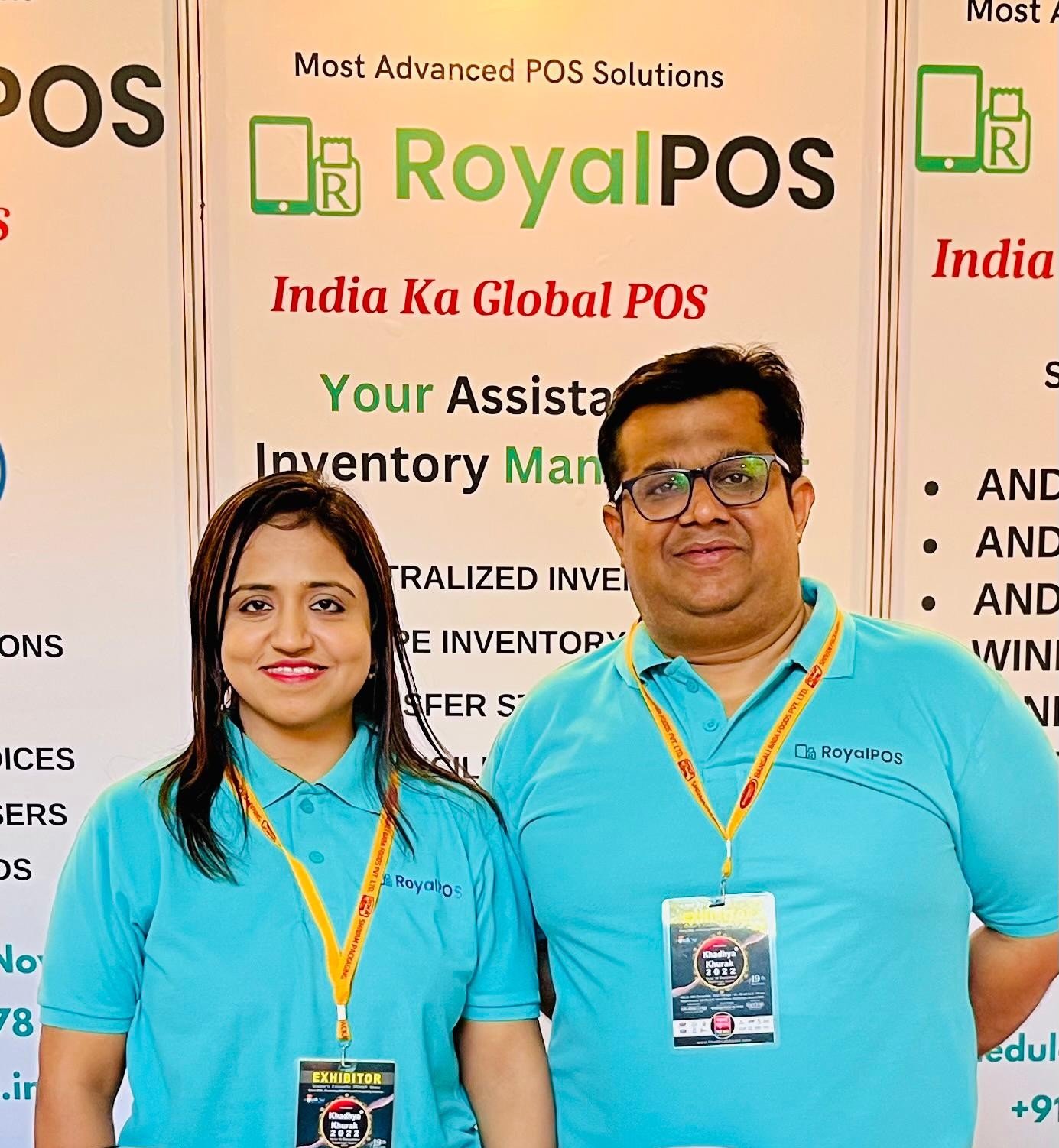
For India’s restaurant and cafe operators, the point-of-sale terminal has long been viewed as little more than a billing necessity — a box that prints receipts and tallies the day’s takings. RoyalPOS is working to change that perception entirely, positioning its platform as a full-stack business intelligence solution that helps food businesses manage inventory, build customer loyalty, automate payments, and make sharper decisions in real time. With over 7,500 food businesses already on its platform — spanning restaurants, cafes, food courts, cloud kitchens, and QSR outlets — and with expansion underway across India and into the Middle East, RoyalPOS is among the more purposeful players in a fast-evolving space. Kitchen Herald caught up with Utpal Ruparel, Co-Founder of RoyalPOS, to understand the technology priorities reshaping food service operations today.
KH: RoyalPOS has built a strong presence in the food service space — what was the founding vision, and how has it evolved as the needs of restaurants and cafes have changed?
Utpal: When we started RoyalPOS, the founding vision was clear: make technology easy, accessible, and genuinely affordable for restaurants, cafes, and food businesses of every scale. At that time, most establishments were still managing billing manually, maintaining inventory on paper registers, and reconciling daily reports through disconnected methods that offered little clarity. A restaurant owner would often close out the night without a reliable picture of what had actually moved, where stock was leaking, or whether a particular shift had been profitable at all.
As India’s food service industry has matured, the demands placed on technology have grown equally. Today’s operator — whether running a standalone neighbourhood cafe or a growing multi-outlet dining brand — expects far more than a billing terminal. They want real-time visibility into sales and stock levels, tools that help them reward and re-engage loyal guests without manual effort, and the flexibility to monitor operations from their phone, whether they are supervising the floor or away from the property entirely.
Our evolution has closely followed those expectations. We no longer think of RoyalPOS as a billing solution — we think of it as a business growth platform, one that helps food businesses operate with greater intelligence, reduce unnecessary waste, control costs more precisely, and make data-driven decisions that were once the preserve of large chains with dedicated technology teams. The Indian restaurant sector is professionalising rapidly, and the tools that serve it must keep pace.
KH: For a restaurant or cafe owner, managing billing, inventory, customer loyalty, and analytics across separate systems is a daily headache. Do you see the POS becoming the single operating platform for food businesses?
Utpal: Absolutely — and we see this not merely as a possibility but as a structural shift that is already underway for the more forward-thinking operators in the market.
The POS sits at the nerve centre of every food business. Every order placed, every payment processed, every item that leaves the cold store or the prep shelf, every guest who walks through the door — all of it passes through or connects back to the POS. That positions it as the most comprehensive source of real-time operational data that any restaurant or cafe owner has at their disposal. The critical question is whether that data stays locked inside a billing interface, or whether it is put to work intelligently across the whole business.
The direction we are actively building towards is full consolidation: billing, real-time inventory management calibrated to food service cycles, customer loyalty programmes, advanced business reporting, and deep integrations with delivery aggregators, accounting platforms, and payment providers — all within one unified system. When an owner or floor manager does not need to toggle between four different screens to understand how an evening service is tracking, they can direct their attention where it belongs — the food, the guest, and the team on the floor.
For operators still running on fragmented systems, the hidden cost — in wasted time, reconciliation errors, and missed business intelligence — is often far greater than they realise.
KH: UPI has changed how guests settle their bills — from QR codes at the table to integrated payment links. How has this shift shaped what food businesses now demand from their POS provider?
Utpal: UPI has brought about a fundamental and lasting change in the payment experience across India’s food service sector, and the expectations it has created among operators are very significant.
Not long ago, closing a busy service shift meant a team member manually cross-referencing UPI notifications against printed bills — a slow, error-prone routine that added real stress to an already demanding close-of-day process. That is simply no longer acceptable. Today, the expectation is clear: every payment — UPI, card, or cash — must settle instantly, reconcile automatically within the POS, and appear correctly in the day’s report without any manual intervention from the team.
For us, this has raised the baseline of what a competitive platform must deliver. Multi-payment support, automatic reconciliation, and real-time collection visibility are no longer premium features — they are fundamental expectations. Any provider that cannot deliver these seamlessly is already operating behind the curve. Speed, accuracy, and simplicity are non-negotiable, whether an operator runs a single outlet or manages a multi-location food service business.
Beyond reconciliation, UPI has also sharpened operators’ appetite for deeper payment intelligence. When the manual matching is removed, better questions emerge — which payment method peaks at which hour, where the friction sits in the checkout flow, how settlement patterns differ across locations. That level of insight is something operators now expect their POS to surface automatically.
KH: Finally, what does the road ahead look like for RoyalPOS — in terms of the food service markets you are targeting and the capabilities you are building?
Utpal: Our immediate focus is on deepening our position within the food and beverage sector while continuing to expand our reach across India and into the Middle East — a region with a vibrant and rapidly growing restaurant and hospitality culture that shares many of the same operational challenges our Indian customers face.
On the product side, we are investing in AI-driven automation, smarter inventory management specifically designed around food service cycles, more sophisticated business reporting, and deeper integrations with the platforms that operators already rely on — from online ordering aggregators to kitchen display systems and accounting tools.
With over 7,500 food businesses already on RoyalPOS, our goal is to significantly extend that reach — empowering more restaurants, cafes, food courts, cloud kitchens, and QSR operators with mobile-first technology that is simple enough to adopt quickly but powerful enough to grow with the business. The future of food service in India will be built on better data, smarter operations, and technology that genuinely understands the pressures of running a kitchen. That is precisely what we are here to deliver.
