

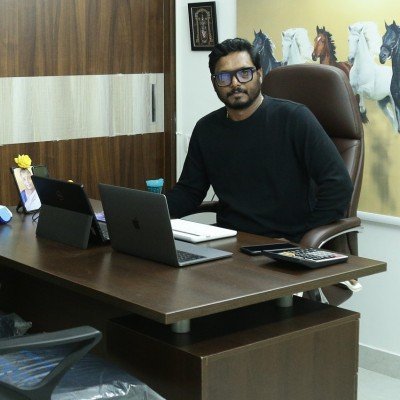
Bengaluru-based SK Technosys, the company behind SK POS, has built its entire product philosophy around a single conviction: that India’s restaurant industry is haemorrhaging money and talent because technology has never been deployed with enough rigour. Founder and CEO Srinivas Narayan speaks to Kitchen Herald about real-time menu management, the true cost of POS avoidance, and why robots are next on his roadmap.
KH: Tell us about SK Technosys and what drives the company’s vision.
SN: We started this business to minimise the restaurant’s problems. Our vision is to be a digital sati for the restaurant — anything they require should happen. We believe that human imagination, combined with technology, can make this industry totally problem-free. That is the mission we are working towards, every single day.
KH: The restaurant industry talks about manpower as its single biggest challenge. How do your products address that?
SN: Even available manpower is making mistakes because technology has not been implemented properly. We want to nullify those problems. We have introduced new technology devices so that customers do not have to wait in long queues — self-ordering systems, better queue management at the front of house.
But manpower is not just about substitution. It is about giving the people who are there the right tools so they stop making avoidable errors. That is where we are focused right now. And further down the line, we are working with a robotics manufacturer in India to bring robots into the restaurant — not just for serving, but for cashier counters. That is a big plan, and it is in progress. We do R&D and trial and error — only when something succeeds in testing do we bring it to market.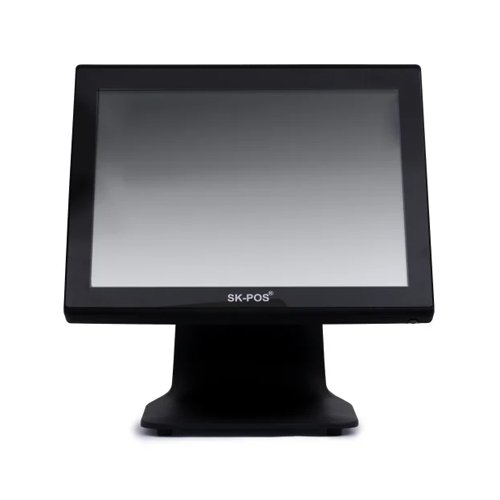
KH: Can you explain your real-time menu management solution? What problem does it solve?
SN: Here is a problem that happens in every other restaurant. A customer walks in, sees idli on the menu board, orders it — and the cashier tells them it is closed. The craving has already formed in their mind. The disappointment is unavoidable. That is a failure that should not exist.
We introduced real-time menu management to fix exactly this. If an item is not available, you switch it off — that item disappears from the display entirely. The customer’s craving never forms for something you cannot deliver. And this is all remotely handled. Sitting at one point anywhere in the country, you can manage 200 outlets — what runs on their displays, what is available, what is not. That is the kind of real-time control we want to bring to this industry.
KH: Restaurant owners often resist technology investment because of the upfront cost. How do you make the case for ROI?
SN: In business, technology is the heart. If you do not have this heart, you cannot manage your body. Without investing in technology, you cannot run your business properly.
The ROI comes within a few months to a year, because the chances of pilferage alone are enormous. Think about it — one cashier pocketing ₹1,000 a day adds up to ₹30,000 a month, and over ₹3.5 lakh a year. Is any restaurant owner not willing to invest a fraction of that amount on technology that prevents the leakage entirely? The numbers make the case for themselves.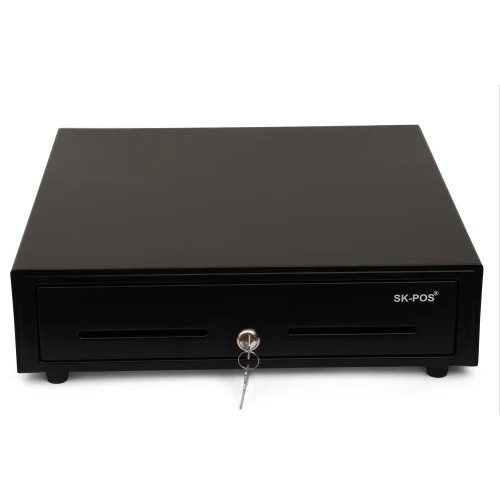
KH: POS systems in India often fail because the interface is too complex for shop-floor staff. How user-friendly is SK POS?
SN: People who sit at the point of sale device are not always from a tech-savvy or highly educated background. We are very aware of that. So we made the interface very simple — simpler than using a smartphone. If a layman who is a sweeper can use a smartphone today, we want our device to be easier than that. Anybody should be able to use it without training.
KH: India is an extremely diverse market. How does SK POS handle regional language support?
SN: We support multiple languages — any language, customised for the client. India is a diverse market and we have to be sensitive to that and respect local languages. Multi-language support is already there in our system. Whatever language a client needs, we can configure it.
KH: Where is SK Technosys currently present, and what are your expansion plans?
SN: We are present across South India and supply Pan India from Bengaluru. We are already serving clients like Baskin-Robbins across the country from here. In Bengaluru, we are the only company providing 24×7 on-site support, because our headquarters is here and we are reachable round the clock. Outside Bengaluru, we provide remote support instantly and have people deployed all over the country. We have plans to expand our branches across India over the next year.
KH: Which restaurant formats do you see growing the most in India?
SN: It is a mix and match — there is a class of restaurants and a class of people, and it depends on the situation. If you are running around and want breakfast, you go to a fast food outlet. If you want to take your family out for dinner, you choose fine dining. If you are planning a party with friends, it is a bar. But when it comes to sheer numbers and growth rate, fast food and cafes are growing the fastest. The numbers there are really significant.
KH: Rising staff costs, raw material prices, fuel — restaurant operators are under pressure on every front. Does this make them more or less open to technology investment?
SN: It should make them more open, and increasingly it does. The question is not whether to invest in technology — it is whether you can afford not to. Every cost pressure makes the ROI case for technology stronger. The leakage problem, the manpower problem, the menu management problem — all of these have technology solutions. Operators who are feeling the squeeze are the ones who should be most motivated to act.
KH: How open are traditional, smaller businesses — especially in non-metro markets — to adopting new technology?
SN: It is changing, and the change is generational. The new generation is coming into traditional businesses — the fourth and fifth generation of family-run restaurants — and they are all technologically aware. Nobody is coming in without knowledge. They are not hesitant to invest in technology; in fact, many of them are asking for more than what we are offering.
And separately, corporate professionals are leaving jobs and entering the food business as a side gig first, then full-time. Their first instinct is to embrace technology. In another five to six years, India will accept whatever technology is brought in. There are still operators who have not invested, and that is exactly our target — to bring genuinely new technologies into the market with enough support that adoption becomes inevitable.
KH: What is next for SK Technosys on the technology front — analytics, new products?
SN: We are moving from being purely a hardware vendor into software as well. Over the next two years, our goal is to bring everything under one roof — hardware, software, displays, menu management, self-ordering, analytics, all from one point. Customers should not have to rely on multiple vendors for different parts of their technology stack. Analytics is on our near-term roadmap — we are planning it, and it will be integrated into the broader platform. Robotics, as I mentioned, is in active development. We have a lot of ideas, and we want to give back to the restaurant industry — the industry where we are earning and living. We want to leave a real footprint.
