

-Jakkampatti Devaraj (cbedit@imaws.org)
India’s food service sector has grown rapidly in the digital age, expanding well beyond traditional cuisine to embrace millets, Chinese, Japanese and Thai food, and sourcing ingredients from as far afield as Thailand, Japan, Hong Kong, Italy and Spain to meet rising quality expectations. Yet behind this growth, the distributors who keep restaurants and food businesses stocked are facing a squeeze that founders in the sector say threatens their survival — and they are now asking the state government to step in.
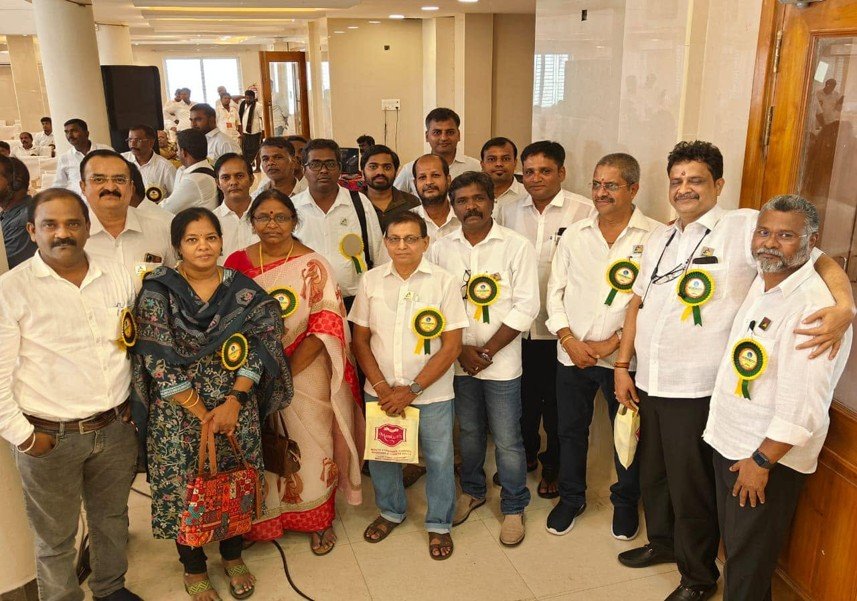
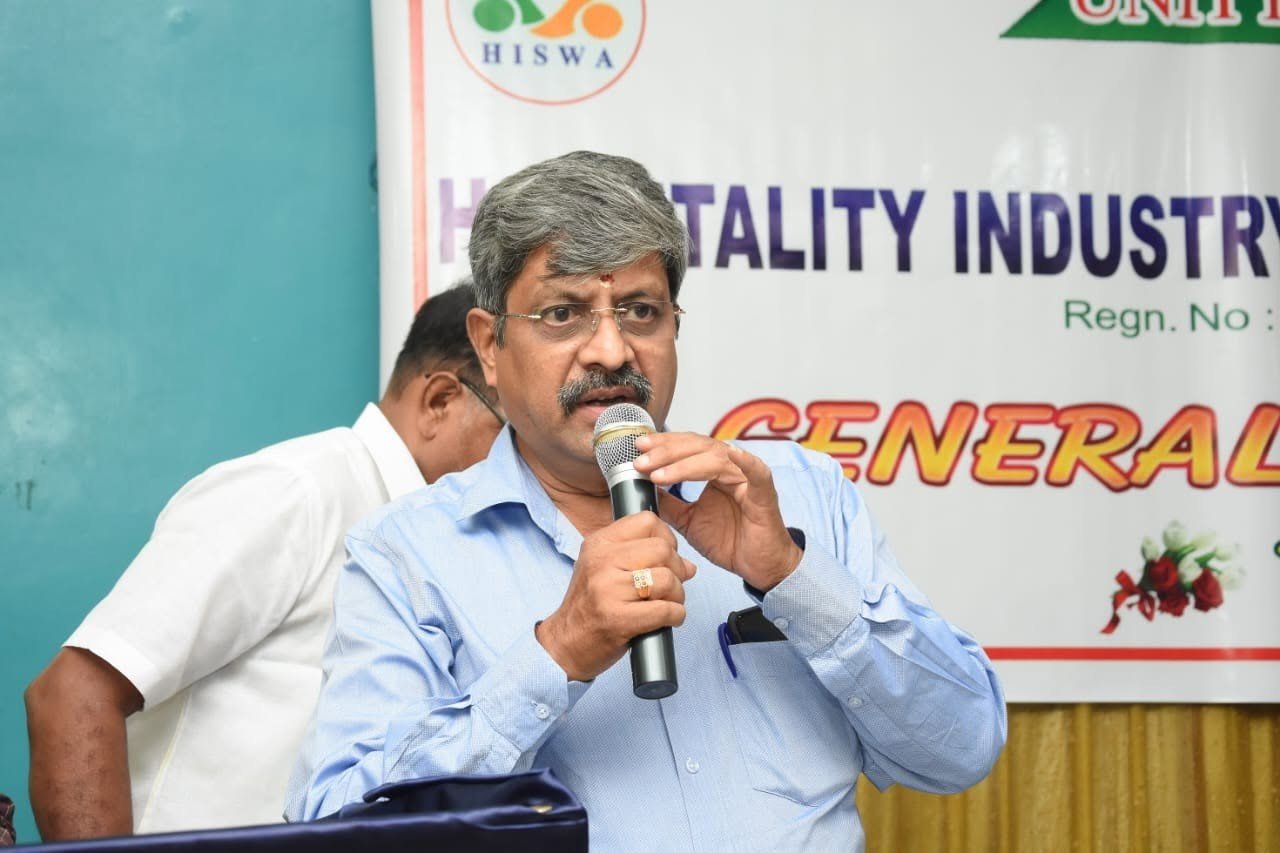
To bring producers, distributors and restaurant owners under one roof, a newly formed association of food distributors is organising a major exhibition on August 14 and 15 at the Institute of Hotel Management (IHM) campus in Taramani, Chennai. Speaking ahead of the event, the association’s founder, J. Ramamoorthy, who also owns Balaji Foods, said food distributors across Tamil Nadu are being battered by the entry of large corporates into the market, and called on the government to find a lasting solution to the problems distributors face.
Growth Alongside Mounting Challenges
Alongside traditional food habits, millet-based dishes and international cuisines such as Chinese, Japanese and Thai have found strong acceptance among consumers. The push for quality has taken the food distribution trade well beyond domestic sourcing, with businesses now importing ingredients from Thailand, Japan, Hong Kong, Italy and Spain. But this expansion has brought its own set of practical difficulties, Ramamoorthy said. Food Safety Rules and Practical Roadblocks
Government regulation is essential to safeguard the growth of any industry, and India’s food distributors are no exception — they operate under rules set by the Food Safety and Standards Authority of India (FSSAI), the country’s food safety regulator. But translating a rule into practice on the ground is not always straightforward. One example Ramamoorthy cited: warehouses storing food products are required to mark out storage areas with yellow demarcation lines at specified intervals. For small, space-constrained storage rooms, this is often simply not feasible, and he argued that the government should offer alternative provisions for such cases.
He also pointed to a tension between regulation and consumer expectations around food colour. Online food delivery apps showcase dishes in vivid, eye-catching colours, but government rules restrict the use of artificial colouring agents. When restaurants switch to natural colourants, the food’s appearance turns duller — and despite wanting to serve quality food using natural ingredients, restaurants find that customer perception resists the change. Shifting that mindset is itself a challenge, Ramamoorthy said, and he argued that distributors and restaurants need adequate transition time to implement government rules.
 Commercial Pressures: The Credit Cycle
Most restaurants in Tamil Nadu buy their supplies from distributors on a running credit cycle. Even when distributors are willing to extend credit, some restaurant owners delay payment beyond the agreed period. Worse, when restaurants shut down abruptly after running into losses, distributors are often left with lakhs of rupees in unrecovered dues — a single lakh being 100,000 rupees, a sum that can represent a significant share of a small distributor’s working capital. This leaves their businesses exposed to serious financial damage.
“It was precisely to address these commercial challenges that we started this association,” Ramamoorthy said. “It was formed to bring together distributors who were operating in isolation, resolve their common problems, and carry their demands to the government.”
The Weight of Big Corporate Players
In today’s digital economy, many large corporations have begun selling directly to retailers or consumers, bypassing traditional distribution chains entirely — a shift often described as direct-to-consumer, or D2C, selling. Where a food manufacturer might sell a product to a traditional distributor for ₹10, the same manufacturer will sell it to a large corporate buyer purchasing in bulk for ₹8, because of the volumes involved. Large e-commerce platforms compound this by offering steep discounts to capture market share, further squeezing traditional distributors’ businesses.
As a result, small and mid-sized distributors operating on fair terms are increasingly being pushed out of the market altogether — putting the livelihoods of the hundreds of families employed under them at risk. Confronting this uneven playing field between big corporations and traditional food distributors has become one of the association’s biggest challenges.
Why Government Intervention Is Needed
Even as Tamil Nadu’s economy continues to grow, the challenges facing food distributors are mounting by the day. However much the association does on its own, Ramamoorthy argued, the state government must stand firmly behind food distributors — and must also bring large corporations under proper regulation.
He called for the same rules that govern food distributors to be enforced just as strictly on big corporations. As one example, he pointed out that food safety authorities monitor restaurants closely, but the uniforms worn by delivery riders and the delivery bags they use are often left unchecked and unhygienic — with vegetarian and non-vegetarian food carried together in the same bag, with no separation at all. This, he said, betrays the trust of many customers, and the fact that no government body raises questions about it is a major grievance among distributors. He urged the government to take firm action to hold large corporations to the same common standards.
Subsidies and the Question of Political Funding
In some Indian states, Ramamoorthy alleged, large corporations that contribute funds to political parties receive certain concessions from the state in return — for instance, some state governments grant approvals to big corporates without proper due diligence. This, he said, has hurt traditional food distributors who have operated in those markets for generations. He urged the government to treat these challenges not as the private troubles of individual distributors, but as a concern for the wider community connected to their livelihoods, and to act accordingly.
Coordinated Action as the Way Forward
Food distribution is far more than a commercial trade — it is a service intimately tied to public health and everyday life. Small and mid-sized distributors today find themselves squeezed from multiple directions: the near-monopolistic dominance of large corporations, the lack of accountability among online food delivery platforms, and mounting unpaid dues from restaurants.
Recognising that these challenges cannot be tackled individually, distributors have now come together under a unified association — a necessary step for the sector’s future. In short, ensuring that consumers continue to receive quality food while safeguarding the livelihoods of mid-sized distributors will require the government, restaurant owners and the food distributors’ association to work together with transparency and mutual understanding. That, Ramamoorthy said, is the only lasting solution for a healthy future for the industry.
