

-KH News Desk (editorial1@imaws.org)
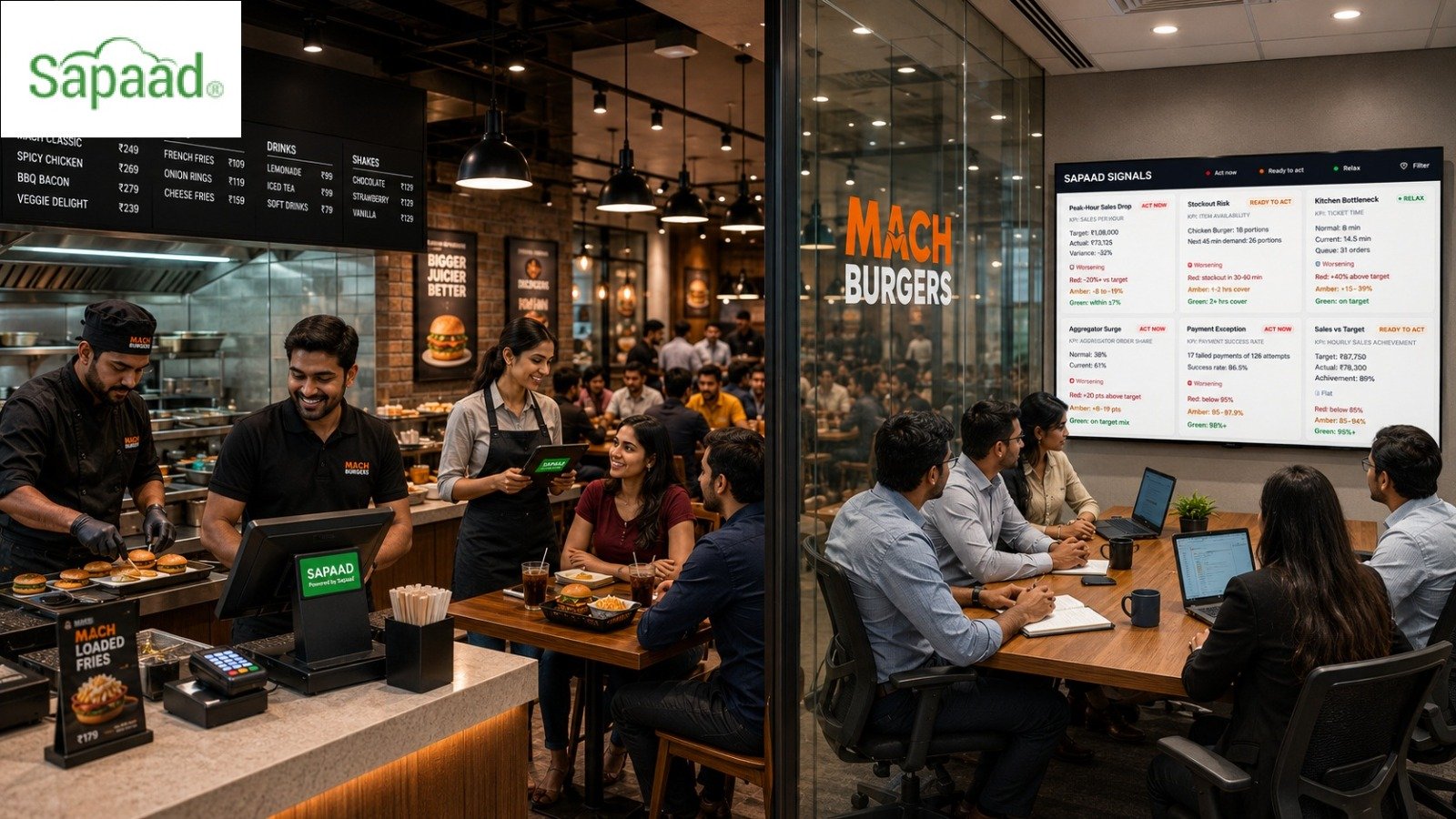
The commercial rollout of this pre-loss detection framework marks a fundamental shift away from traditional “hindsight” analytics. Historically, independent restaurant owners and enterprise-level hospitality groups have relied on end-of-day reports or monthly reconciliation balances to evaluate their operational health. Consequently, critical financial issues—such as inventory waste, labor over-scheduling, or unapproved discounts—are typically uncovered hours or days after they occur, at which point cash recovery is no longer an option. Sapaad Signals disrupts this reactive cycle by allowing floor managers to intervene and correct errors while the operational shift is still active.

Vishnu Vardhan Madabhushi, the Founder and Chief Executive Officer of Sapaad, stated upon launch that the restaurant ecosystem has structurally struggled with delayed problem visibility. He explained that the company’s objective with this rollout is to supply modern operators with immediate, predictive clarity. By utilizing a sophisticated data network developed over 12 years of core engineering, the platform converts raw transaction inputs into direct tactical advice. Early data samples from live store test deployments indicate that the real-time system can help businesses recover up to 11% in additional revenue by catching operational gaps early.
Eliminating Margin Gaps via Live Unified Architecture
Unlike standard business intelligence platforms that depend on slow, fragmented third-party software integrations, Sapaad Signals utilizes a fully unified cloud database. The software engine continuously pulls, cleans, and analyzes cross-department data streams in under six seconds. This includes scanning live point-of-sale (POS) ticket actions, tracking active ingredient depletion levels, reviewing hourly labor rosters, evaluating historical customer purchasing patterns, and monitoring ongoing marketing promotion metrics.
The system is configured with 18 distinct live signals to instantly alert management regarding multiple operational risks, including:
Void Fraud and Discount Misuse: Recognizing anomalous order cancellations, suspicious bill modifications, or unauthorized promotional overrides at the register.
Sudden Stockouts: Tracking rapid ingredient usage during high-volume periods to prevent menu item unavailability and lost kitchen revenue.
Labor Inefficiencies: Flagging periods where labor costs outpace sales metrics due to inaccurate staffing forecasts or service delays.
Declining Upsell Performance: Spotting drops in high-profit add-on sales across specific server shifts or service channels.
By consolidating these complex data points into a single dashboard view, Sapaad eliminates the need for managers to toggle between isolated point-of-sale terminals and separate back-office accounting tools. This level of central oversight is particularly valuable for multi-location brands and fast-casual chains looking to enforce operational consistency across diverse geographic regions. As tech adoption accelerates throughout India and international markets, the introduction of real-time pre-loss intelligence provides global food service providers with an important competitive advantage to protect their bottom-line margins.
