

-By B Swaminathan (swami@imaws.org)
Walk the floors of FHA 2026 in Singapore, and one thing is clear — Southeast Asia’s food service industry is no longer just emerging. It has arrived. Hotel kitchens are scaling up, quick service chains are expanding into smaller cities, and the bakery and beverage scene is booming from Hanoi to Jakarta. Dairy, once seen as a product category with little local relevance in this part of the world, is now one of the most contested ingredients on the shelf.
In the middle of all this stands Anchor Food Professionals (AFP), the food service arm of Fonterra, New Zealand’s dairy giant. While most global dairy brands have traditionally operated on a simple model — produce in Europe or New Zealand, ship to Asia — AFP has spent years building something very different. The brand now has a presence across more than 50 markets in Asia, and it is not talking about the region from the outside. It is working from within it.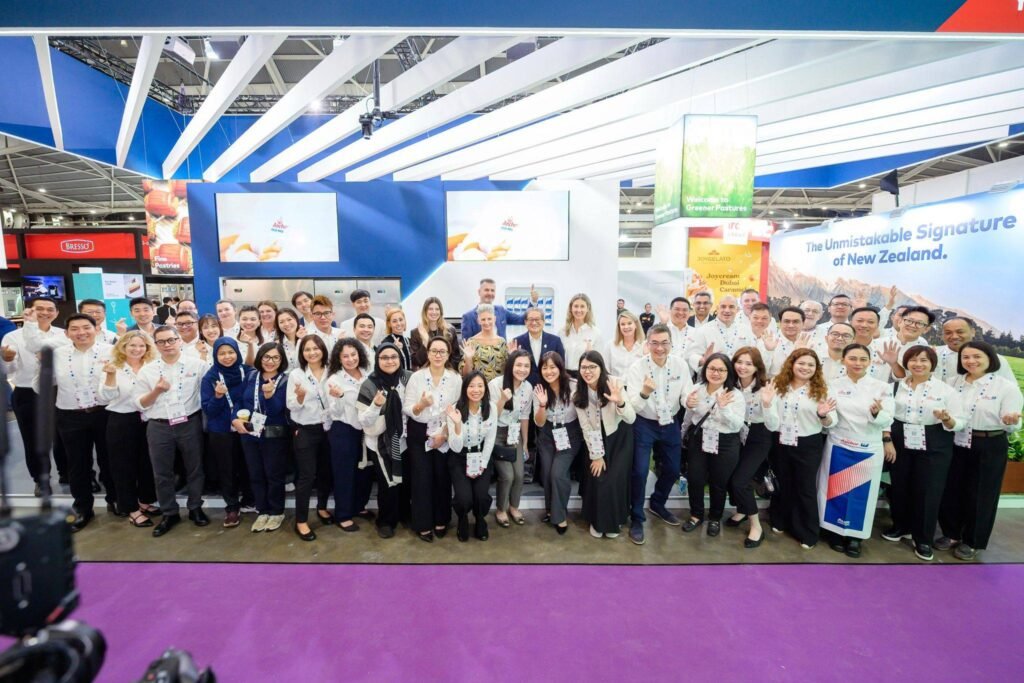
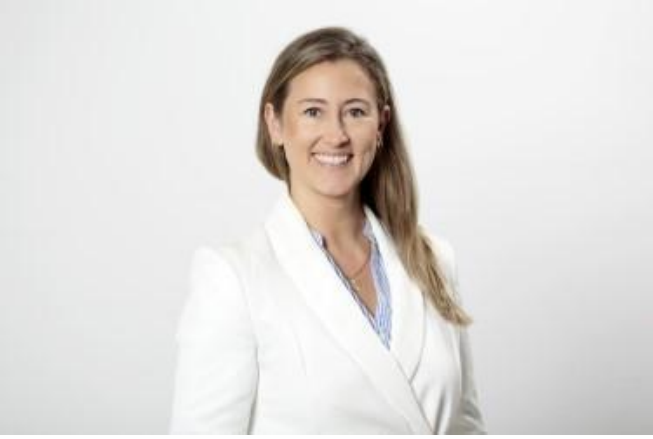
At FHA 2026, Katie McClure, Global Food Service Marketing and Innovation Lead at Anchor Food Professionals, spoke candidly about where the growth is coming from, how AFP earns the trust of buyers who would rather source locally, and why she believes dairy and plant-based food can both grow at the same time — without one cancelling the other out. What emerges from the conversation is a picture of a brand with strong numbers and a deliberate, people-first strategy to back them up.
An Asia-First Business, Built for Asia
AFP’s footprint in Asia is significant. China remains its largest market, with six application centers across Shanghai, Wuhan, Shenzhen, and other major cities. But the conversation at FHA 2026 kept coming back to Southeast Asia — a region Katie describes as AFP’s most important growth engine right now.
“Southeast Asia is where we see the future,” she says. AFP has established what it calls ‘application kitchens’ in five key markets — Malaysia, Vietnam, Thailand, Indonesia, and the Philippines — each designed to develop and test dairy solutions that are built for local palates and local kitchens, not adapted from somewhere else.
This is where AFP draws a clear line between itself and the way many European dairy suppliers work. “We are very much export-led,” Katie says, “but our focus is on creating solutions specifically for Asia. Asia needs its own answers — not just products shipped from somewhere else.”
Numbers That Tell a Story
The HoReCa channel — hotels, restaurants, and cafés — has been a consistent bright spot for AFP across the region. Over the last three years, Katie says, Southeast Asia has delivered around 9 percent volume growth in this channel. That is strong by any measure, and it is being driven by a mix of forces: a booming bakery and beverage scene, QSRs scaling up across the region, and a wave of food service businesses growing fast enough to need reliable ingredient partners.
Two markets in particular stand out. Vietnam has logged close to 18 percent growth — a number that turns heads even in a region full of good stories. Indonesia is not far behind. “We are actively looking at how we can accelerate in these markets even further,” Katie says. Korea is another market the company is watching closely, with expansion on its radar.
The Local Chef Strategy
Dairy is one of the most market-specific products in food service. A buyer in Ho Chi Minh City has very different needs — and very different reasons to say yes or no — compared to a buyer in Kuala Lumpur or Manila. For a global brand, this is where things can easily go wrong. Katie is well aware of the challenge.
“We cannot simply walk into a market and say, ‘Here is a New Zealand product, take it,'” she says. “We have to be locally relevant.”
AFP’s answer to this is a strategy it describes as ‘global scale, local excellence’ — and the most visible part of that strategy is its chef network. The company has more than 70 chefs working in local markets around the world. These are not corporate representatives sent from a head office. They are food professionals who understand how people in their market cook, what they eat, and how dairy fits — or could fit — into those meals.
“They work directly with our customers to make dairy work better for them,” Katie says. “It is about having the right people on the ground, speaking the same food language.” That means helping chefs at hotels and restaurants build menus, develop recipes, and solve practical kitchen problems using AFP products — not just selling them a box and walking away.
A Crowded Field, and Why AFP Is Not Worried
Growth attracts competition. Southeast Asia’s food service boom has not gone unnoticed, and more brands are moving into the region. Katie acknowledges this directly, but she does not frame it as a problem. Her view is that rising competition also brings rising expectations from customers — and that AFP is well placed to meet those expectations.
“Buyers are going to demand higher quality, more consistent supply chains, and better innovation,” she says. “That actually plays in our favour.” Two things give AFP its edge, in Katie’s view. The first is provenance. The grass-fed story from New Zealand — the idea that the cows that produce Anchor dairy products graze on open pastures, eating grass rather than feed — resonates strongly across Asia, where consumers and professional buyers alike are increasingly asking where their food comes from. The second is AFP’s model of building what Katie calls a ‘performance partnership’ with customers.
“We do not just deliver a product and say goodbye,” she says. “We work together on products, applications, menus, recipes, and sometimes supply chain solutions. That depth of offer is hard to match.”
On Vegan Food and the Future of Dairy
The rise of plant-based food is a question that follows every dairy brand into every conversation. Katie’s answer is clear-eyed and without defensiveness. She acknowledges the shift — consumers are more aware of what they eat, more curious about their choices, and more open to alternatives than ever before. AFP supports that.
But she is equally clear that this does not mean dairy is in retreat. “What we are also seeing is very strong growth for dairy and dairy protein,” she says. “Both things can be true at once.” In Southeast Asia’s food service kitchens, dairy still plays an important role in how food is made and how it tastes — in its functionality, its flavor, and how it performs under heat. And the use of dairy as a protein source in professional kitchens, she says, is still only beginning to develop. “That is actually a very exciting space for us.”
Proving the Grass-Fed Claim
Traceability is a word that gets used a lot in the food industry, often without much behind it. At AFP, it is something Katie speaks about with specificity. Fonterra’s food safety and quality processes give customers assurance that what they receive is consistent and tested. But the more interesting development is around grass-fed verification. The New Zealand government has recently introduced a new national grass-fed standard — one that sets a measurable, high bar for how much grass cows eat and how many days they spend on pasture. AFP worked alongside this process to ensure it can show end customers proof, not just a promise.
“It is not just something we say — we can show the data,” Katie says. “And Fonterra meets the highest level of time-on-pasture among all grass-fed suppliers.” For buyers in Asia who care about provenance, that is a meaningful difference.
Managing Disruption, Staying the Course
No conversation about supply chains in 2026 is complete without touching on the disruptions the world has seen — conflict, fuel shortages, rising costs. AFP has not been immune. But Katie describes a mature and structured approach to managing risk, one that includes working closely with governments to secure fuel and supply, anticipating problems early, and hedging where needed.
“There are real risks — fuel prices going up, cost pressures,” she says. “But we have been managing them well and working hard to minimise the impact on our customers.” In a region growing as fast as Southeast Asia, keeping that supply chain steady is not just a logistical task. It is, she suggests, a core part of what it means to be a reliable partner.
