

-By B Swaminathan (swami@imaws.org)
Gen Z is ditching alcohol, black coffee is staging a comeback, and local chains in India and China are redefining what a coffee brand looks like. Kerry Asia Pacific’s Eloise Dubuisson explains why the next decade belongs to operators who think globally but act locally — and why your syrup supplier should feel more like a business partner.
The Signature Drink Is No Longer Optional
Walk into any competitive coffee market today and the pressure is immediately visible: every counter, every menu board, every social media feed is racing to offer something nobody else has. The days when a solid cappuccino or a decent jasmine tea was enough to build a loyal following are effectively over.
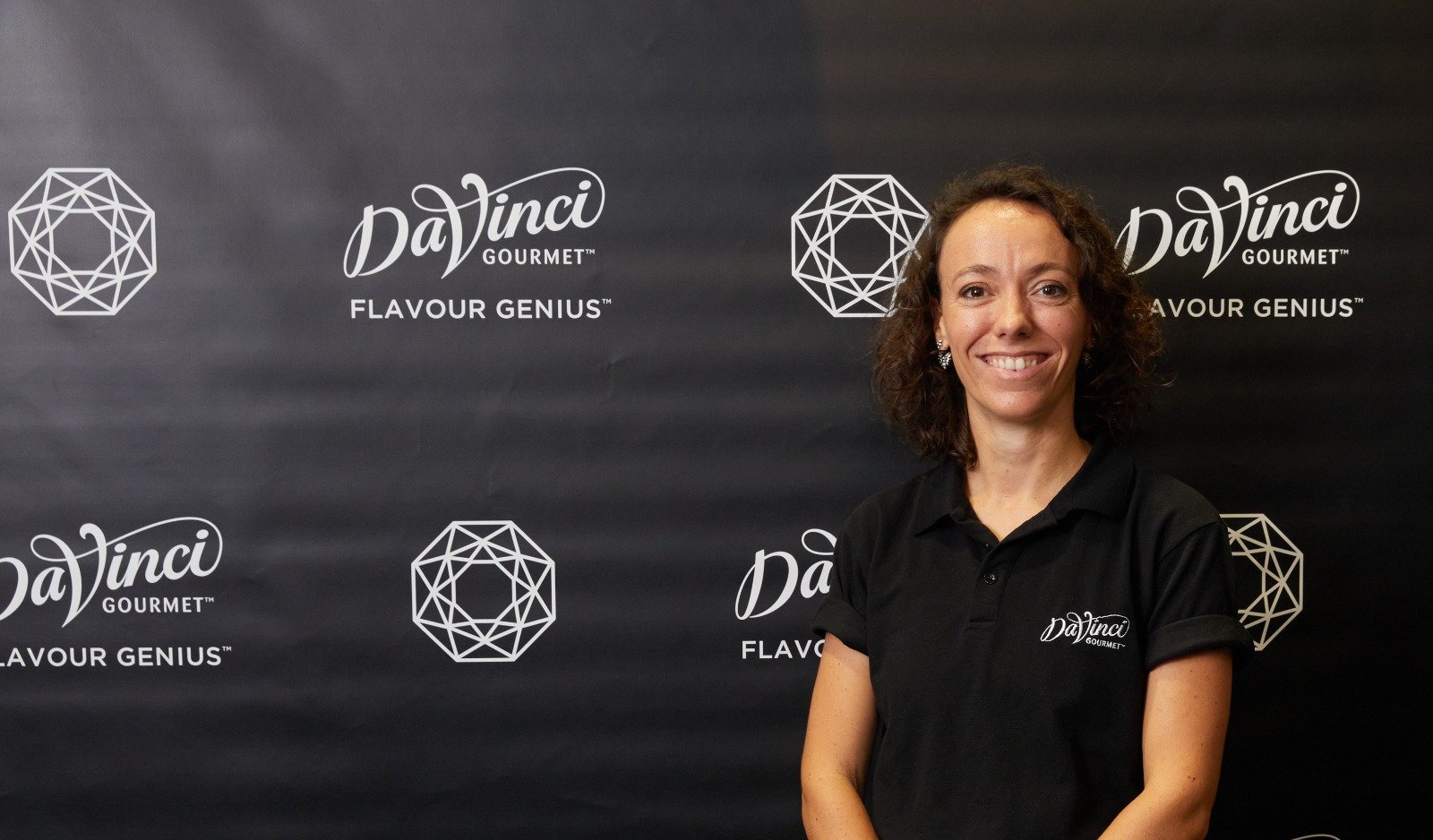
Eloise Dubuisson, General Manager of Food Service Brands at Kerry Asia Pacific, Middle East and Africa, puts it plainly while speaking to Kitchen Herald. “Gen Z consumers are looking for unique, exclusive drinks that look great, taste great, and that they cannot find anywhere else,” she says. “Coffee shops and tea shops are really looking at differentiating themselves by creating their signature flavor.”
The evidence is everywhere across the region. Matcha — already a fixture on menus — is being layered into strawberry matcha combinations. Mont Blanc coffee is gaining ground in Australia. Vietnamese coffee, built on condensed milk and roasted almond notes, is spreading well beyond its home market. In Malaysia and India, butterscotch and toffee nut profiles are drawing new audiences.
For Kerry’s Da Vinci Gourmet brand — a key tool for coffee and tea operators building these signature menus — this creativity wave is both an opportunity and a responsibility. The brand’s role has shifted from supplying syrups to actively enabling operators to build menus that stand out, hold up through delivery, and keep customers coming back.
Sustainability Is Now Part of the Recipe
The second major shift Dubuisson identifies is harder to see in a cup but increasingly visible in consumer decision-making. Sustainability and ethics are no longer niche concerns — they are becoming baseline expectations, particularly among younger customers.
“The new generation makes choices about brands based on what is the story behind the drink,” she says. “Is it doing good for the farmers? What ingredients are used?”
As a sustainable nutrition company, Kerry has built this thinking into Da Vinci Gourmet’s positioning across the food service channel. One of the clearest expressions of that commitment is the push toward lower-sugar formulations. Coffee shop customers increasingly want less sugar in their drinks, and Dubuisson points out that this demand aligns with a broader environmental case — sugar production is water and energy intensive, so reducing it benefits both health outcomes and planetary impact.
The partnerships Kerry has built reflect the same thinking. Da Vinci Gourmet works with Cafe Femenino, a programme supporting women coffee farmers across Asia, Latin America and Africa — a distinction Dubuisson notes no other brand in the space has made. For mocha applications, the company sources chocolate from Rainforest Alliance certified farms.
“It is really looking at it as a Golden Circle,” she says. “It is not just about one syrup you use. It is about where you source your coffee, how much sugar you put in your drink, where you source your ingredients — looking at it as a whole.”
The Local Pride Wave Is the Next Big Thing
The third trend Dubuisson describes may be the most structurally significant for the global food service industry. Coffee has evolved in clear generational steps — from ready-to-drink and three-in-one formats, to the rise of international coffee chains, and now into something quite different: a wave of locally rooted, independently spirited operators who are reinventing what coffee culture looks like in their own markets.
“India is booming with independent entrepreneurs. China is growing chains with thousands of outlets,” she says. “This local pride, local reinvention of coffee and tea — it is really the next wave.”
She draws a useful arc: from retail coffee, through mainstream global chains, and now into a specialty tier defined by local sourcing, community identity, and entrepreneurial ambition. To engage this segment, Kerry has built a partnership with 100 of the world’s best independent coffee shops — a deliberate effort to celebrate and support operators who are elevating coffee culture at the neighbourhood level, not just at scale.
Glocal Is Not a Buzzword — It Is a Business Model
Given that these trends are so rooted in local identity, a natural question follows: how does a global brand stay relevant without flattening the very specificity that makes local operators successful?
Dubuisson’s answer is what she calls “Glocal relevance” — a model that combines the technological depth and global reach of a company like Kerry with genuine, on-the-ground local presence.
“When you look at Kerry and Da Vinci Gourmet, we have local manufacturing. We have local teams everywhere,” she says. At the FHA trade show in Singapore, Kerry brought in what it calls Flavor Geniuses — baristas and mixologists from individual markets including Indonesia, India and Japan — to demonstrate exactly this point. These are not global templates applied locally. They are locally developed ideas supported by global infrastructure.
In India, for example, Da Vinci Gourmet products are manufactured domestically, with flavors developed specifically for that market’s palate, using Kerry’s proprietary sugar-reduction science. At the same time, those local teams are connected to a global network that allows them to track what is emerging in Vietnam, China, the United States and elsewhere — feeding that intelligence back into local innovation.
“People need to look at what is happening in other markets for trends,” Dubuisson notes. “That is where our Flavor Geniuses are connected, and that is where the global relevance comes.”
Black Coffee Is Back — and It Is Bringing Fruit
The rise of plant-based milks was one of the defining stories of the past five years in coffee. But Dubuisson identifies a shift that is beginning to reshape that narrative: the return of black coffee.
What is driving it is not a rejection of flavour — quite the opposite. It is a reimagining of what black coffee can be. Cold brews, signature Americanos, and a rapidly growing category of fruity Americano formats are pulling drinkers away from milk-based drinks for a combination of reasons: lightness, health perception, cost, and sheer novelty.
“We launched a campaign around fruity Americanos across Southeast Asia and it was one of our best performing campaigns,” Dubuisson says. The guava Americano — cold guava with an Americano base — became one of Da Vinci Gourmet’s best sellers in the region. Nitro cold brew with citrus flavours followed.
“Black coffee is really back on trend. It is more sustainable, it is better for health, and it is targeting more consumers than milk-based drinks.”
This shift also intersects with the vegan conversation in a nuanced way. While alternative milks drew attention for several years — oat, coconut, almond — Dubuisson suggests much of that momentum was driven less by veganism and more by curiosity. Consumers wanted to experiment with taste. Now, many are skipping the milk question entirely and finding their experimentation in black coffee formats instead.
Gen Z Is Choosing Coffee Over Cocktails
Across Asia, a generation of young consumers is making a conspicuous shift away from alcohol. Global alcohol sales are declining among younger demographics, and in markets with significant Muslim populations, as well as in communities where health consciousness is reshaping social norms, coffee is stepping into the social role that alcohol once occupied.
“Coffee is bringing everyone together,” Dubuisson says. “When you want to get together in a healthy, mindful way, coffee is really the binding agent.”
The signature drink trend amplifies this: what was once the cocktail — the personalised, photographable, Instagram-worthy drink that signals taste and identity — is now the specialty coffee order. Morning coffee parties are emerging as a social format in their own right, replacing the nightclub or the after-work bar.
“People want to be seen with a cup of coffee. They want the energy boost. And what was the cocktail before is now this signature coffee or tea drink.”
Da Vinci Gourmet’s Role: Supplier to Service Partner
In the HORECA space, Da Vinci Gourmet’s focus is deliberately concentrated on the coffee shop channel — and Dubuisson is candid about why. The market is growing fast, competition is intensifying, and operators need more than products. They need business knowledge.
“We do not see ourselves as just a syrup or sauce provider,” she says. “We see ourselves as a service provider for coffee shops.”
That means webinars and on-ground training covering menu development, operational efficiency, delivery optimisation (including ensuring drinks stay stable and appealing across delivery times), pricing strategy, and sustainable practices. The Flavor Genius Academy and the Barista Craft Championship — both of which Kerry runs across its markets — are expressions of this community-building approach.
The challenge for many independent operators is survival, not just growth. Rent is rising, new competitors appear constantly, and dark kitchens or delivery-only coffee concepts are adding further competitive pressure. Kerry’s positioning as a strategic partner, rather than a commodity supplier, is built to address exactly that gap.
Coffee Is Expanding Beyond Coffee
In the final dimension of the conversation, Dubuisson points to something that is already happening but that many operators have not yet fully capitalised on: coffee as an ingredient and a base for a far wider range of beverages than most menus currently reflect.
The coffee-and-tea combination — long a fixture in certain Southeast Asian and Chinese markets — is being reinvented and repackaged for broader audiences. Coffee with coconut water, sparkling water and various juice bases is expanding the definition of what a coffee-based drink can be. Even the intersection with alcohol — particularly in hotel food service environments — is emerging as a format worth watching.
But perhaps the most immediately actionable insight for operators is this: coffee shops can no longer be just about coffee. Matcha, reinvented chai, refreshing iced teas, blended drinks, and fruit-based refreshers are all expected on a contemporary menu. The signature flavor logic that applies to coffee applies equally to every category on that menu.
“When we partner with coffee shops on the menu, they need way more than coffee,” Dubuisson says. “People are looking at tea. Matcha is a need. Chai, reinvented. Refreshing drinks, ice blended. It is about how you bring a signature flavor across different beverage applications.”
A mango refresher, a green apple tea, a fruity Americano — in Dubuisson’s view, these are not peripheral additions to a coffee shop menu. They are the future of what winning operators will look like.
